This is my type of people, shown in my type of movie.
“What is my type?” you may ask.
Jack Kerouac did a good job explaining:
The only people for me are the mad ones, the ones who are mad to live, mad to talk, mad to be saved, desirous of everything at the same time, the ones who never yawn or say a commonplace thing, but burn, burn, burn like fabulous yellow roman candles exploding like spiders across the stars and in the middle you see the blue centerlight pop and everybody goes “Awww!”
―Jack Kerouac, On the Road
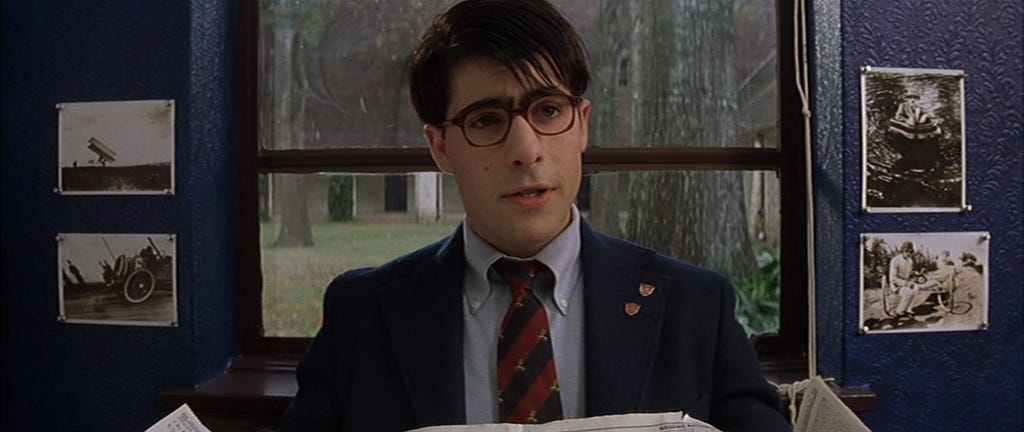
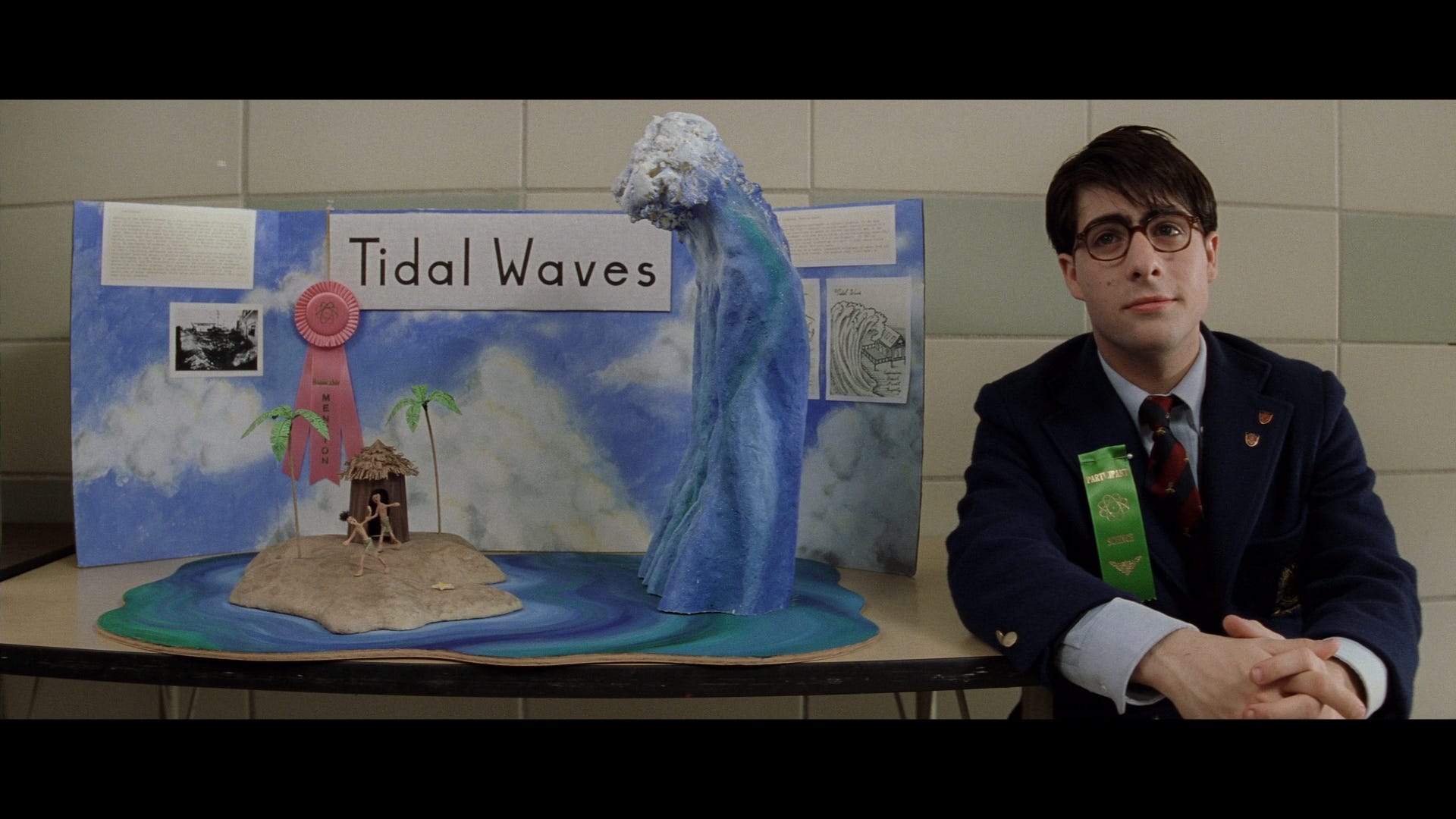
In Wes Anderson’s Rushmore (1998), Max Fischer is a fifteen-year-old genius who fails in school because he spends all his time doing extracurriculars. He’s smart, and anyone who’s also smart knows he’s smart. Don’t get me wrong, he’s failing school, and the private school he attends, where he also received a scholarship after the principal saw the play he did in second grade, now wants to expel him because he keeps getting bad grades.
But it takes one to know one, and Herman Blume—played by Bill Murray, super successful steel magnate, father of twins at Rushmore, a man surrounded by money and boredom—likes the guy.
Herman Blume: What’s the secret, Max?
Max Fischer: The secret?
Herman Blume: Yeah, you seem to have it pretty figured out.
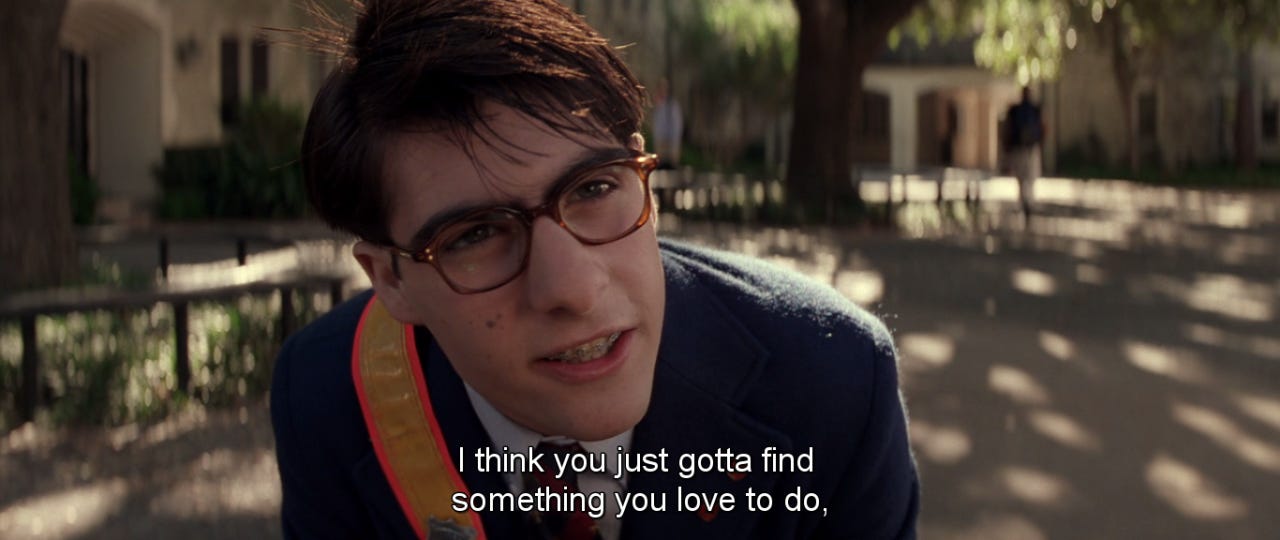
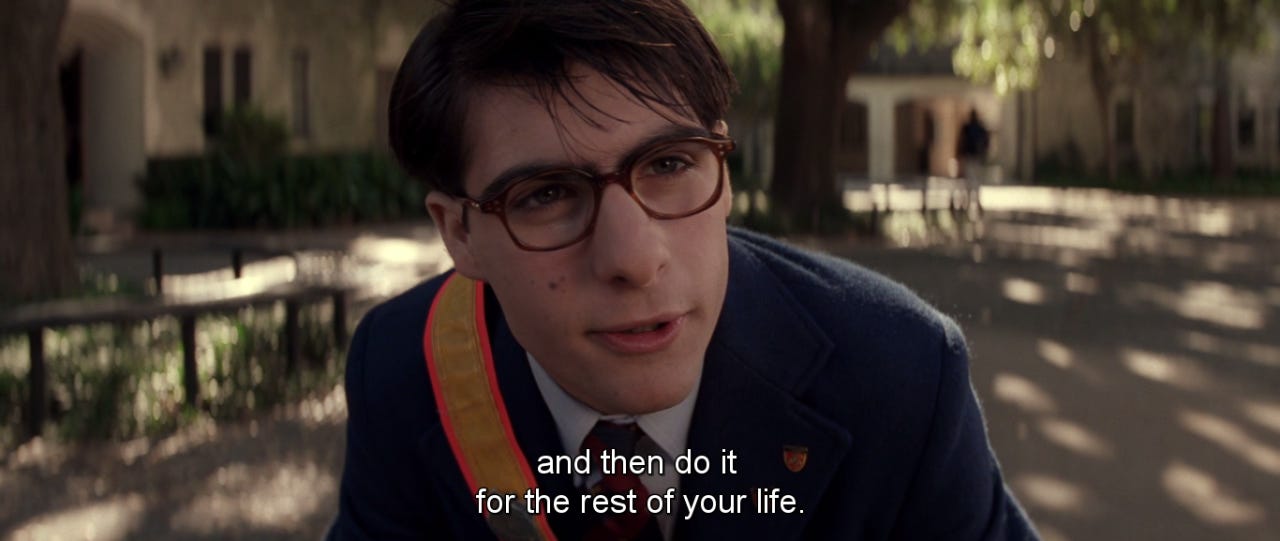
Max Fischer: The secret, I don’t know… I guess you’ve just gotta find something you love to do and then… do it for the rest of your life. For me, it’s going to Rushmore.
At some point, Herman wants to hire him.1
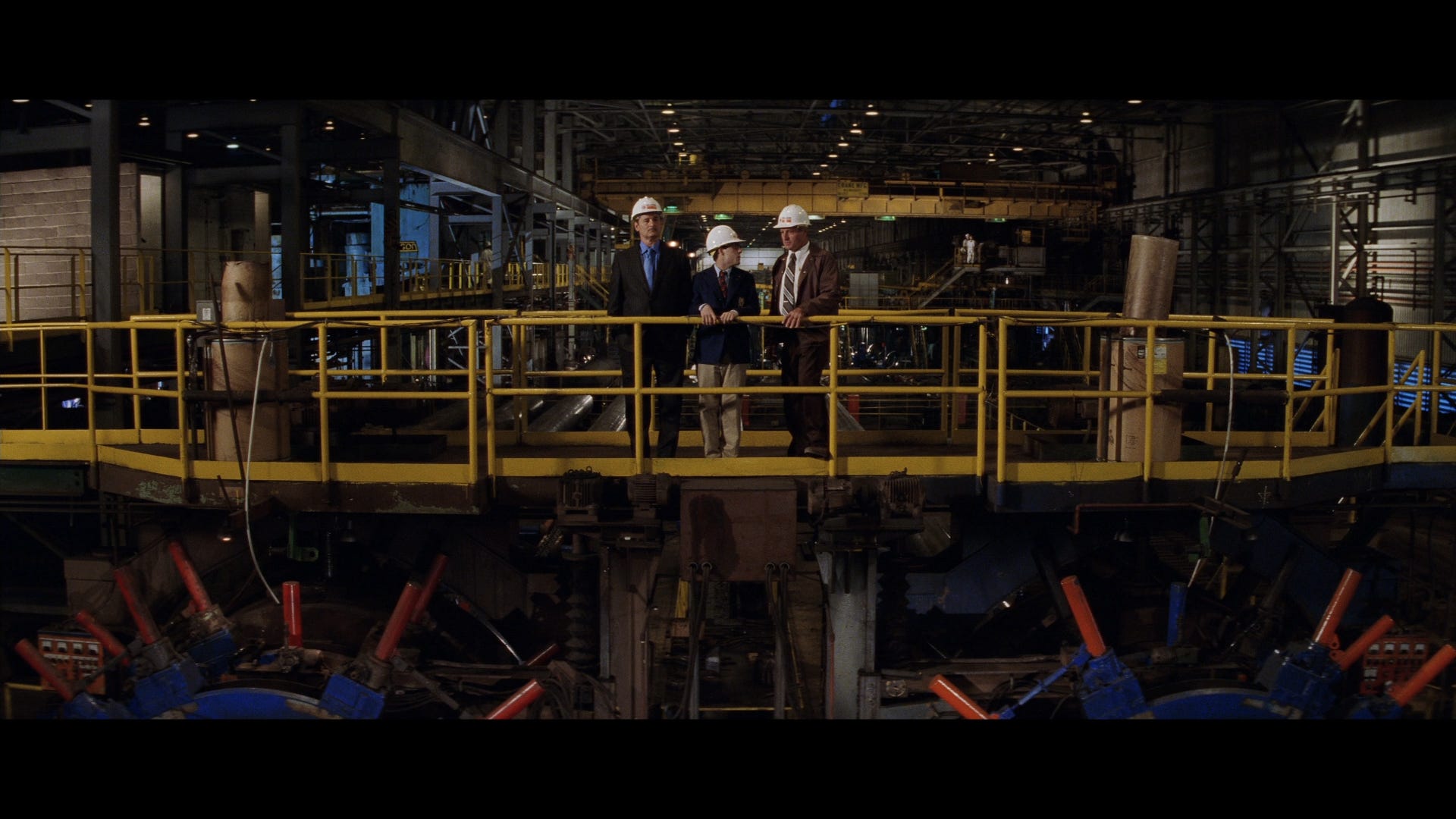
Herman Blume’s company. What a cool shot. Just a huge factory. What a dream.
Max is the type of guy who doesn’t study for his classes but is involved in every club, and if there isn’t a club for an interest of his, he starts one. He’s also the type of person who is willing to do things. At one point, the school wanted to cancel Latin classes, but because he wanted to impress the first-grade teacher he was falling in love with, he gets a bunch of signatures, and Latin became required from 7th to 12th grade. He can do stuff. He’s capable. In my vocabulary, he’s Jailbroken.
He’s not street-smart. That’s a fallacy. A fallacy created by “book-smart” people to explain why other people are more capable than they are, so they call them street-smart. When in reality, they’re just smart, and the book-smart people aren’t.
Don’t believe me? Max was reading Diving for Sunken Treasure2 when he read a note a previous borrower had left. Here’s the note:
“When one man, for whatever reasons, has the opportunity to lead an extraordinary life, he has no right to keep it to himself.”
— Jacques Cousteau
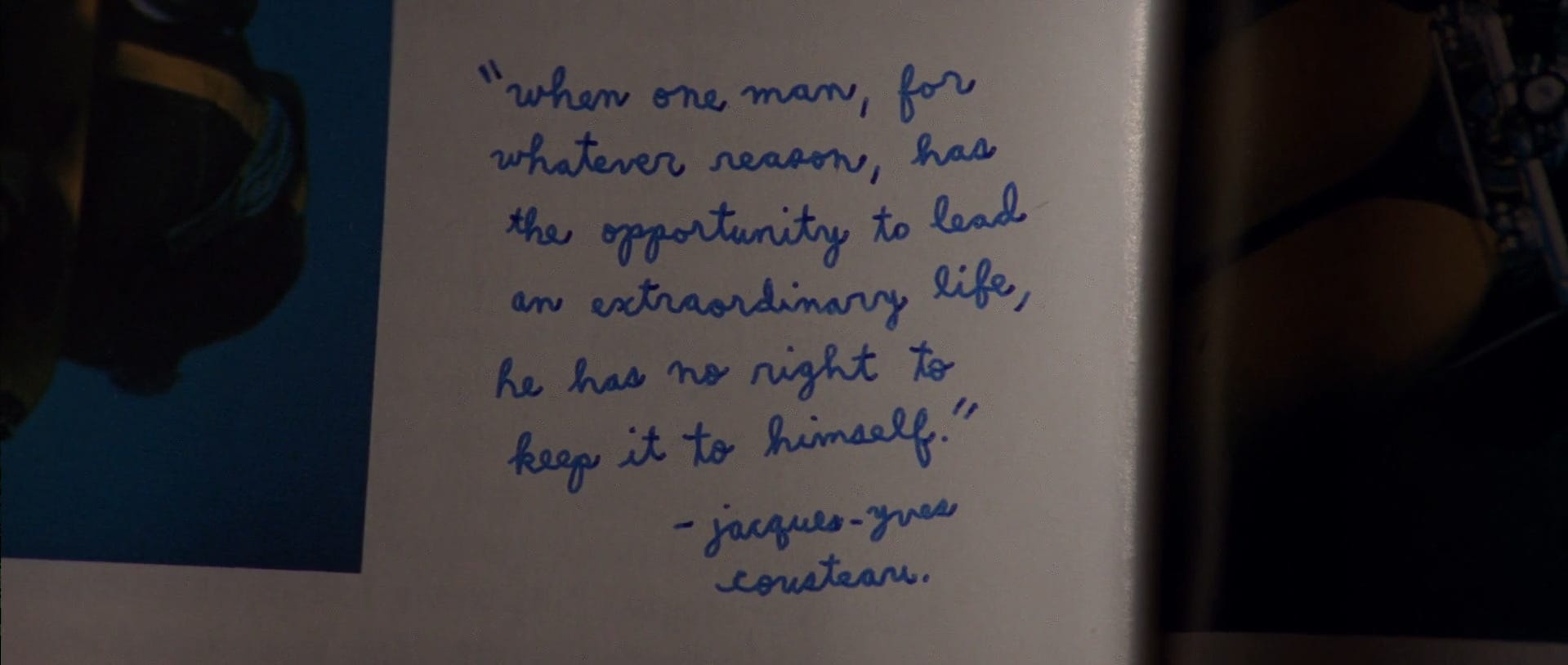
Max immediately loves the quote, asks the librarian for a list of people who have checked out the book, and finds that the person who wrote the note was the attractive and elusive Harvard graduate who didn’t have a major and is the new first-grade teacher.
She didn’t have a major? I must say again: this is my type of movie by my type of people.3
You may call him book-smart, but as we already talked about, that’s just nonsense. Max is just alive. He’s Jailbroken, and it’s a pity he’s at school surrounded by people who care about normal things. That sounds bad, but let me clarify. For instance, Herman’s sons just have force. In the part of the world where I come from, we say those people have “the body of a bull and the mind of a chicken.”4 They are the classic tough, play-hard private-school boys who already seem like they have become the worst version of men before even becoming men at all, loud, physical, spoiled, incurious, the kind of boys who mistake aggression for personality because nobody has ever forced them to become interesting. When Herman sees his sons wrestling, of all things, it causes him great disappointment. He wanted them to be alive, to be interesting. Yet here they are, grinding another kid’s face into the mat. They have no beauty. They don’t have an obsession, a private need, or a desire of their own. They’re just blank. Herman looks at them and sees (and feels) nothing. He finds this quite boring, if not downright depressing.
Max Fischer is the epitome of the jailbroken character.
To understand a jailbroken person, you must understand his enemy.5 In school, that will always be the bureaucracy. This movie impressed me the most because it understood how to deal with the bureaucracy. It showed how to get things done despite their existence. Wes Anderson and Owen Wilson did a great job.6
Max knows school rules are flexible and made up, and that they feel inescapable only because we collectively agree to act as if they are. But we can decide at any moment that they’re not laws of nature, because, guess what? They are not. I’ll give you an example. At one point, he wanted to build an aquarium to impress the lovely first-grade teacher who likes fish, so he went to Herman Blume to ask for money. When Blume asks him if he talked to the principal, Max says he wanted to talk to him first. Why? Max knows the bureaucrats’ answer will always be no. So he does what one does, finds the money, and just does the thing. A bureaucrat is phobic of two things in his life: money and public image. You can use those two as knobs to liberate yourself and reach enlightenment.7
But that’s the least interesting thing about him because he’s a Renaissance man. He’s beyond capable. Schools fail to recognize his genius as they often do. For all we know, he might be the next Lin-Manuel Miranda with his plays. But no, no, let’s make sure he passes all his classes.

The principal’s office.
I should note something that might not be obvious if you’re not a character like Max Fischer, and perhaps even yours truly. Why does he join all the school clubs? Why does he do all of this? To get into a good college? To impress people? Because he’s insecure and afraid? No, no, this is just what he does, the way a river does not decide to move and the way light does not decide to illuminate. He has a duty to understand all parts of the universe, and the clubs and everything he does are slices that give you a more accurate representation of reality. But really, he can’t help himself. He wants to learn about everything and do just about everything. The truly incurable, curious would understand. That is the only way to live and the only way there ever was for such people.
If music is about learning how to listen, art about learning how to see, writing about learning how to read, reading about learning how to learn, then learning itself is about learning how to become human. He must become a spy of reality, always listening, always watching, always learning, collecting fragments to do his thing: make the plays.
He’s mature. That’s something else you might think about him. Some might call him “precocious” if he had some kind of disability. No, no. He understands that life is just a flicker, so why cosplay as a kid, which is usually just an ageist way of saying a dumb, agency-less individual? He wants to do things. Understand things. Become things. He knows that age or time alone do not grant you the wisdom to speak and act freely.
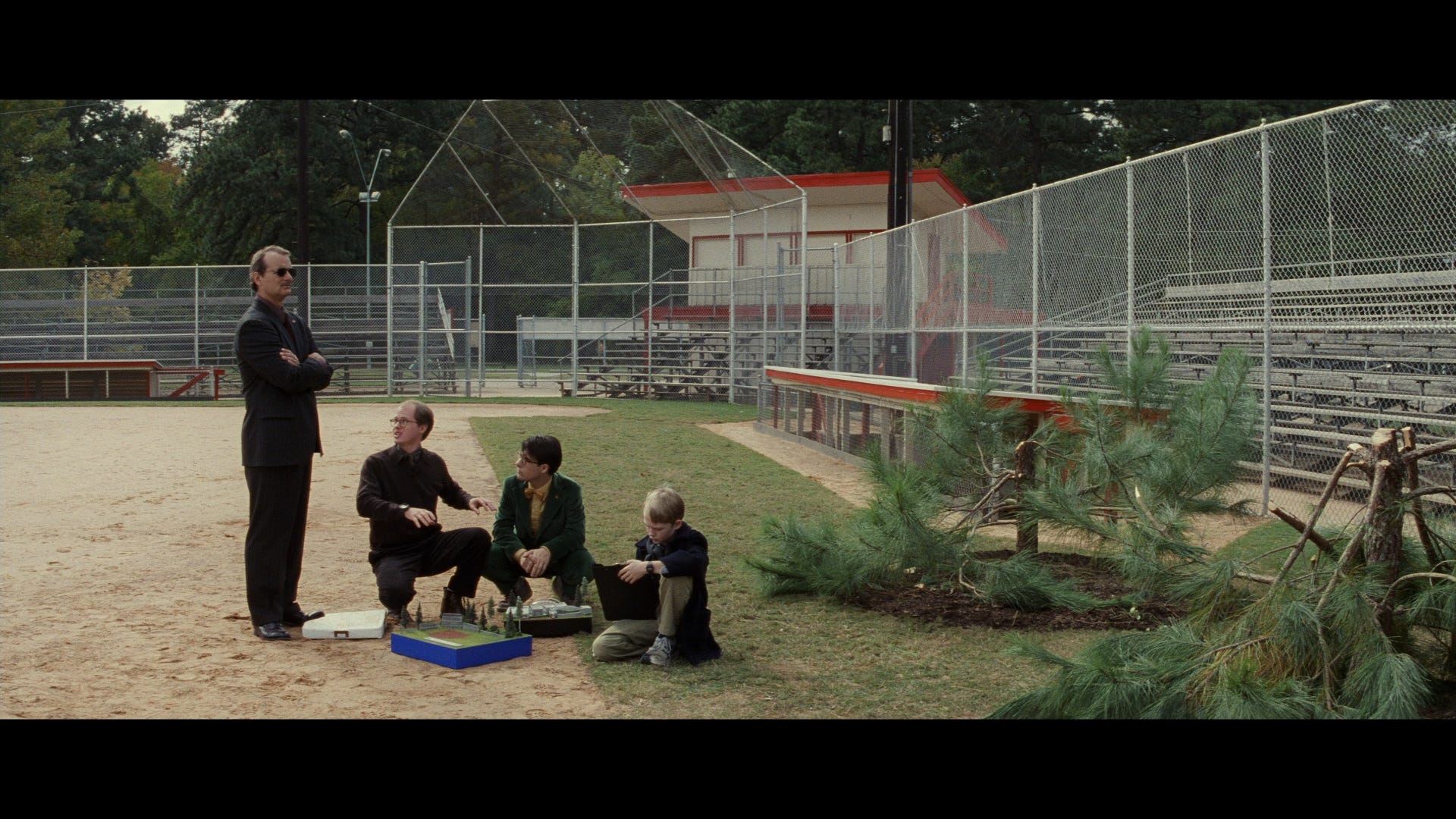
Planning the aquarium.
Max ends up getting expelled. Surprise? Well, not really. He doesn’t get expelled because of his grades. He gets expelled because he’s building a freaking aquarium. He got the money, he got the plans, and just started building. The bureaucrats were appalled and kicked him out.
Now he goes to a public high school. The second he enters, you can see Wes Anderson and his team completely change the visual language of the movie. Rushmore Academy was warm, theatrical, carefully composed, almost storybook-like. The public high school is wider, flatter, harsher, with fluorescent lighting, washed-out colors, more physical distance between people and the camera. The frames suddenly feel emptier. Max looks smaller inside them. The energy changes. Rushmore felt curated by imagination and people who cared. This new school feels governed by inertia.
He starts at this new school. He notices things are missing, and he says he’s going to start a fencing club. He doesn’t wait. He wants to improve things. This is just what he does. He creates. He’s a little Benjamin Franklin trapped in society’s compulsory containment of the young: school. Go become an apprentice to Blum, go to Broadway, go to San Francisco, find a fully alive person, a scientist, an artist, an entrepreneur, a filmmaker, just please, someone help him out. Have John Galt call him!
A few days ago, I met a Christian pastor from New York City. How does one meet a Christian pastor from New York City? I have no idea, but I did. I do my serious search to understand his soul, and what he’s truly about. I found a few things, but I’ll only tell you about one now. His deep belief about the world is that most people are followers and very few are leaders. There are bad leaders and good leaders. Bad leaders try to benefit themselves at the expense of others and often have no vision or intrinsic cosmic duty. Good leaders steward people to the true, to the right, and to the beautiful. Emphasis on beautiful. He didn’t quite put it this way, but that was my understanding. Viscerally, I don’t like how it feels to think that most people are followers, but this pastor believes it and doesn’t question it. If that’s true, then your role is to be a good leader. To lead, because if you don’t, he felt, people could be prey to bad leaders, and the world would be worse off.
Assume the pastor is right for a moment. I don’t know if he is, but let’s assume he’s right. Max is a leader in a world where most people are followers. He will start things, he will learn things, and he will get things done. Max is a leader, and there’s nothing you can do about that. Expel him if you want. Offer him money or power. He doesn’t care. He has that dog in him, as some Gen Z folks might say. Talk the talk, walk the walk, a dog will always bark, and especially when the world goes dark.
So, of course, when he gets to the new high school after he’s expelled, he becomes active, starts things, and becomes immediately involved in everything. He makes the school better. He makes the world better. Leading, coordinating. This is just who he is.
Now, let’s go back to your high school years. Would you have befriended him? Would you have made fun of him like everyone else? He stood out, no doubt about that. But will your fears of being with the “not-so cool kids” prevent you from being with a source of aliveness that you know is right but refuse to get close to?
In an interview with Charlie Rose, Wes Anderson was asked if he would ever direct a movie written by somebody else. Anderson says no, because the movies he writes and makes are personal to him, and the other stuff isn’t as meaningful.
I’ll let him answer and describe Max Fischer’s character and why he cares about Rushmore:
The movie is about someone who doesn’t try. In high school, one of the central things is to be cool, and this is a kid who’s not cool at all, but who has his own ideas about the things he wants to accomplish. He has this great enthusiasm for those things, and this kind of drive about it, and resilience. That’s something that means something to us. I like people who are kind of unusual characters and kind of originals.
—Wes Anderson
Don’t worry. The minute he donates a building to the school, all of a sudden he’s cool.
At one point, Max asks Herman, “How much are you worth?” “Maybe ten million.” Max says, “We’re going to need all of it.” He has a plan for the money, and he uses it. He’s playing to win. He’s not afraid. He wants to do things, people, and money are all just parts of the grand project of life he is trying to create.
I must confess something to you now.
Everything you just read was written before roughly the 40:00 minute mark of the movie.
He does get a little nuts. And he’s not perfect. He’s vengeful, causes chaos, and is often not very forgiving.
But he learns.
One of the most important things Max learns is that one of his bullies, who was probably jealous of him the entire time, did not actually want to destroy him. He just wanted to be included in one of Max’s plays. That’s such a Benjamin Franklin thing to understand: if you want to lower tension, do not confront people directly. Ask them for advice. Borrow something from them. Give them a role in your world.
“He that has once done you a kindness will be more ready to do you another, than he whom you yourself have obliged.”
—Ben Franklin, The Autobiography of Benjamin Franklin

This is how Max recruits his biggest bully to his biggest play yet.
Towards the end of the movie, Max makes the biggest play he’s ever made to date, and before the play starts, some bureaucrat says, “But the plans were never submitted to the city.”
He just did the thing. More importantly, he brought everything into it: the disciplines, the lovers, the bullies, the mess, the science, the friends, the enemies, the technology, the not-so-good, and the good. He made his play, which the word “play” is too small for what it was. It’s his life. He showed his life to us.

The play is a masterpiece, and afterward Wes Anderson cuts to a small sequence of reaction shots, not dramatic revelations exactly, but people quietly trying to process what they just watched.
Coach Beck, still trapped in the practical mindset of an administrator, says:
“I’m surprised they let him build a real campfire onstage. It’s clearly a safety hazard.”
Ernie responds:
“Well, last year he tried to raise piranhas.”
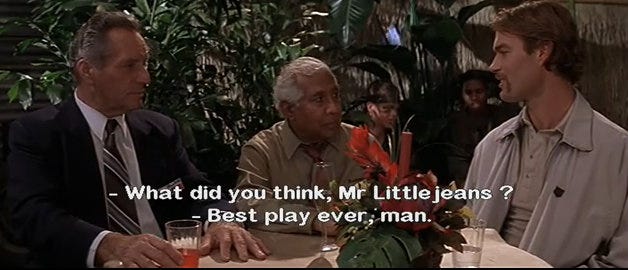
Then they ask Mr. Littlejeans, the Indian groundskeeper:
“What’d you think of the play, Mr. Littlejeans?”
And he simply says:
“Best play ever, man.”
Are you out of your goddamn mind, Coach Beck? What do you mean, they let him? You’re asking the wrong question. Who will stop him? And the answer is nobody.
But the final triumph is not that nobody can stop Max. The final triumph is that, by the end, people stop wanting to.
Rushmore is about the rare person who does not wait to be authorized into existence. Max Fischer is failing school because school is too small a container for him. He is not admirable because he is a good student, or even because he is talented. He is admirable because he turns private obsession into a public good8: clubs, campaigns, aquariums, plays, whole worlds. But the movie is smart enough to know that aliveness alone is not virtue. Max has to learn that the highest use of agency is not getting your way. It is creating a world other people can enter.
The entire movie is proof that your obsessions can become a world large enough for other people.9
“You can’t change the world. It’s not possible. All you can do is try to make your own world and then invite other people to be a part of it.”
—George Lucas

Coach Beck.
He has ideas, he has a million aspirations, and he doesn’t ever give up.
A couple of months ago, a friend called me. He has a job he doesn’t really like and was a bit bummed out. The kid is one of the smartest people you’ll ever meet; it’s self-evident, and he has been thinking about taking on a grand adventure. Anyways, we have a conversation and at the end, he says, “One of the reasons why I like talking to you is because you believe. You’re a believer.” Max is also a believer. He believes in something. He doesn’t just want to be told what to do; he wants to do things. He believes in the arts, in human potential, and in the opportunity to be alive. He believes in himself and in other people so much that he makes them believe in themselves.
I believe in what Max Fischer believes. That’s why I had something almost every day of the week in high school, some club, some meeting, some project, some thing I was trying to start or improve, while still not exactly doing great in school. That’s why I do things intrinsically. That’s why I know becoming jailbroken will be one of the most important things in the 21st century.10

Go, go, go,
Juan David Campolargo
P.S. First time I ever watched a Wes Anderson movie, and I’m impressed. He’s only made 13 feature films. 12 left. Obsession: loading.
P.P.S. This movie reminded me of Almost Famous (2000), another one of the greats. If you’d like to read what I wrote about that, let me know.
Discuss