From Prompt Engineering to Harness Engineering — a 20-minute deep dive into the third paradigm shift of AI engineering, the US-China agent race, and why the next trillion-dollar company might be an agent framework.
Abstract
A phenomenon: Nous Research’s Hermes Agent amassed 47K stars in 42 days, becoming the fastest-growing AI agent framework in history. Its secret weapon — a self-improving learning loop — makes the agent smarter the longer it runs, a fundamental departure from traditional stateless agents.
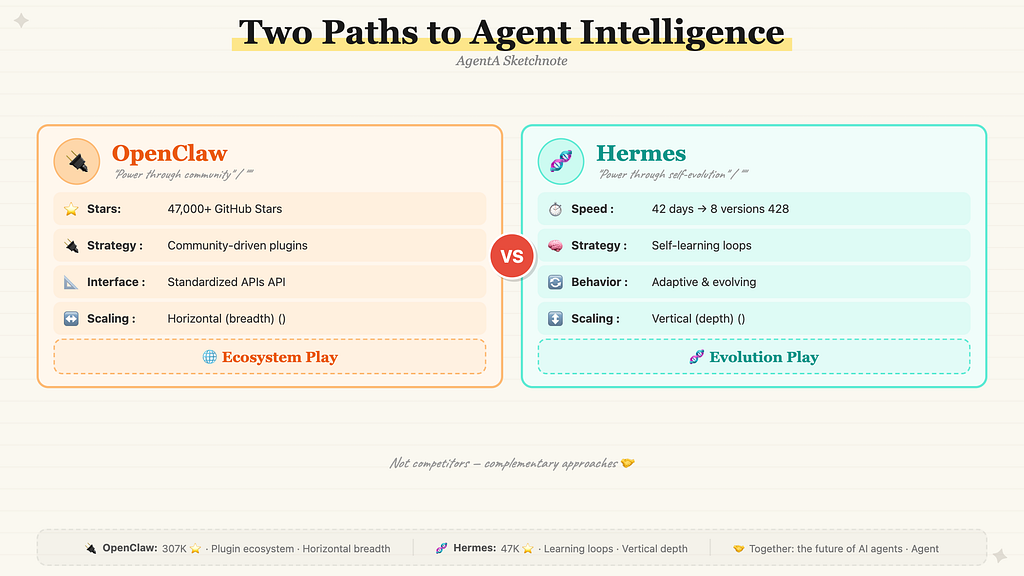
A rivalry: Hermes’s rise directly challenges OpenClaw (307K stars). This isn’t just a product competition — it’s a philosophical clash: Hermes bets on vertical self-evolution, OpenClaw bets on horizontal plugin ecosystems.
A paradigm shift: Behind this rivalry lies the third paradigm shift in AI engineering — from Prompt Engineering to Context Engineering to Harness Engineering, a concept Hermes pioneered. With model prices collapsing 111x in three years, the competitive moat has shifted from “who has the bigger model” to “who can harness AI better.”
A global divergence: Zooming out, the US and China are diverging — the US builds “engines” (foundation models), China builds “vehicles” (agent frameworks and applications). With DeepSeek V4 on the horizon, the last piece of China’s AI sovereignty puzzle is falling into place.
A verdict: The real winner of the Agent War won’t be a framework. It will be whoever learns to harness AI first.
I. Hermes Agent: The 42-Day Insurgency
On February 25, 2026, a team best known for fine-tuning language models and building RLHF frameworks quietly pushed a new repository to GitHub. The project was called Hermes Agent. The team was Nous Research — a collective with deep roots in Web3 cryptography and open-source AI.
Forty-two days later, on April 8, Hermes Agent had shipped eight major versions, merged over 500 pull requests, attracted 242 contributors, and earned 47,000 GitHub stars. Reddit threads titled “NEW Hermes Agent Update is INSANE!” were trending. YouTube was flooded with comparison videos. And for the first time since its meteoric rise, OpenClaw — the reigning king of AI agents with 307K stars — felt a genuine competitive threat.
How did a Web3 team pull this off?
The Nous Research Lineage
Nous Research didn’t stumble into AI agents by accident. Their journey followed a deliberate technical arc:
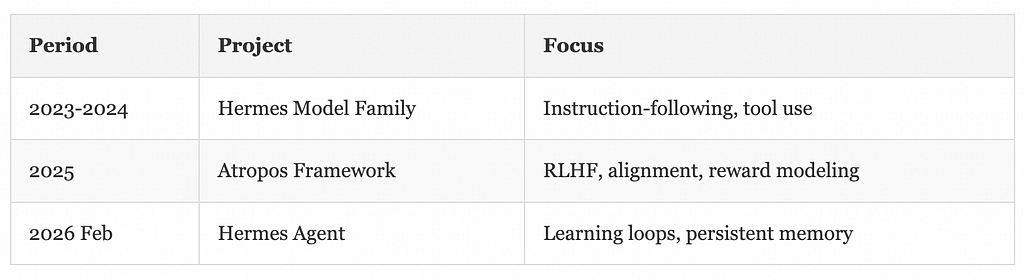
Each step built on the last. Fine-tuning models taught them how LLMs think. Building RLHF infrastructure taught them how to make LLMs learn. And their Web3 background — where private key management and permission isolation are existential concerns — gave them a security-first DNA that would become Hermes Agent’s most underrated advantage.
The 42-Day Sprint
The velocity of Hermes Agent’s development is unprecedented in open-source AI:
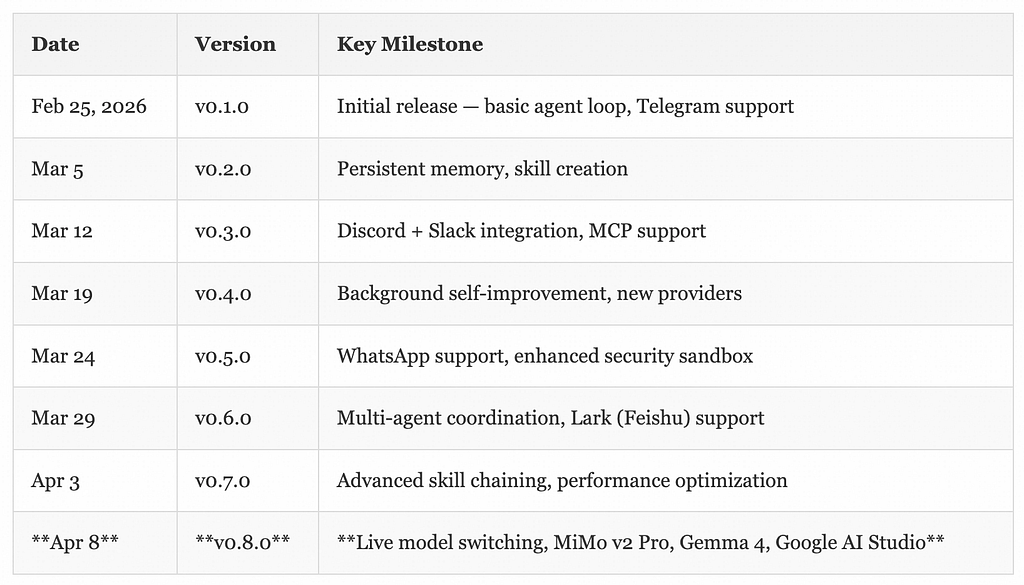
That’s a major release every 5.25 days. For context, OpenClaw’s release cadence in its first 42 days was roughly one major version every two weeks.
Core Technology: The Self-Improving Agent
What makes Hermes fundamentally different from OpenClaw — and from every other agent framework — is its closed learning loop. Most agents are stateless: they execute a task, return a result, and forget everything. Hermes remembers, reflects, and evolves.
The Learning Loop
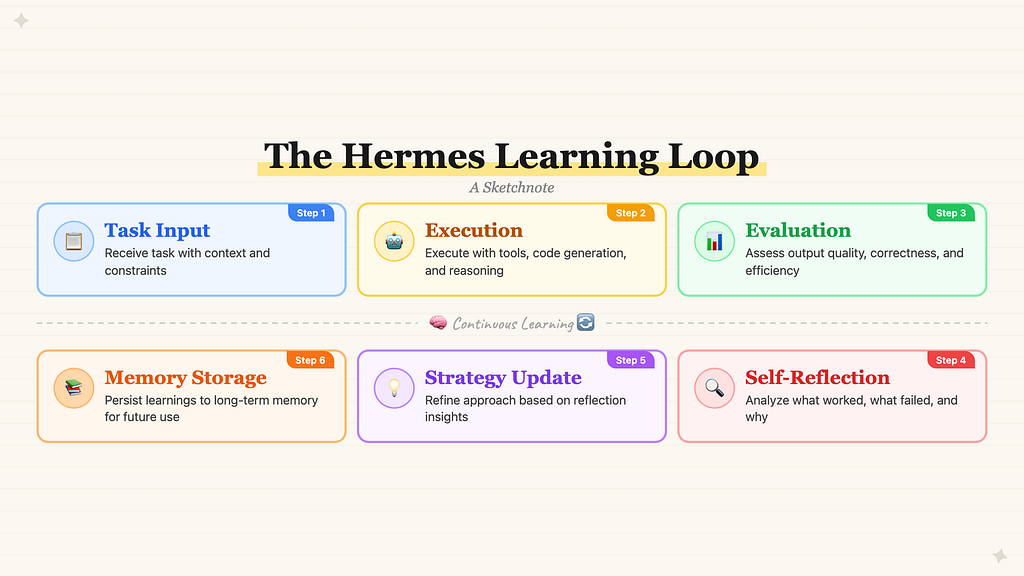
Here’s a concrete example. Suppose you ask Hermes to “deploy a Python Flask app to AWS.” The first time, it might take 15 steps and make 3 mistakes. But after completing the task, Hermes:
- Evaluates what worked and what didn’t
- Distills the successful path into a reusable pattern
- Crystallizes it as a new skill called deploy_flask_to_aws
The next time you — or anyone using the same Hermes instance — asks for a similar deployment, it executes the crystallized skill in 5 steps with zero mistakes. The agent literally got smarter.
Layered Memory Architecture
Hermes implements a four-layer memory system that mirrors how human cognition works:
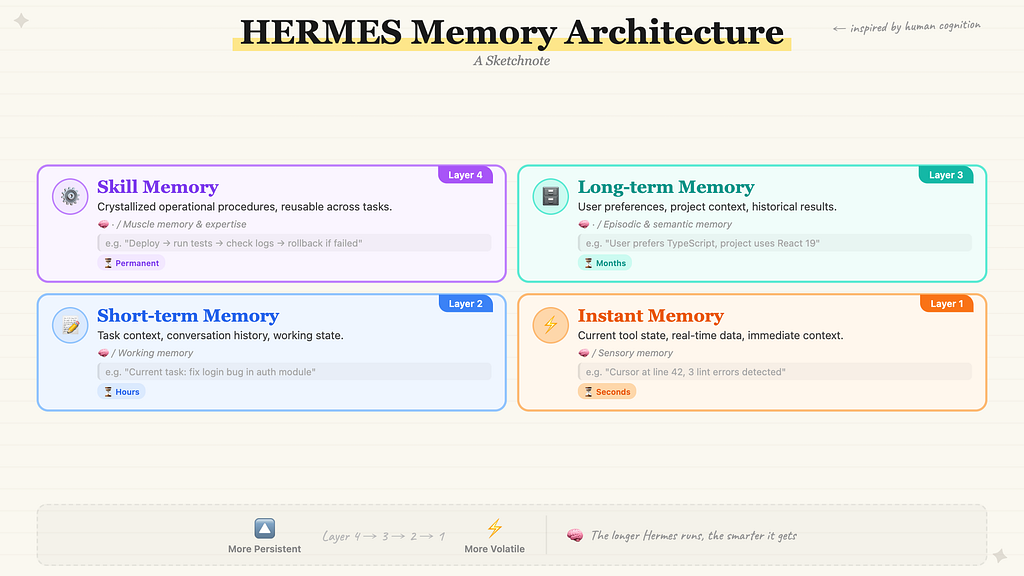
This is why Hermes users report that the agent “stops asking the same setup questions” after a few weeks. It remembers your preferences, your coding style, your deployment targets — and adapts accordingly.
Security Hardening: The Web3 Advantage
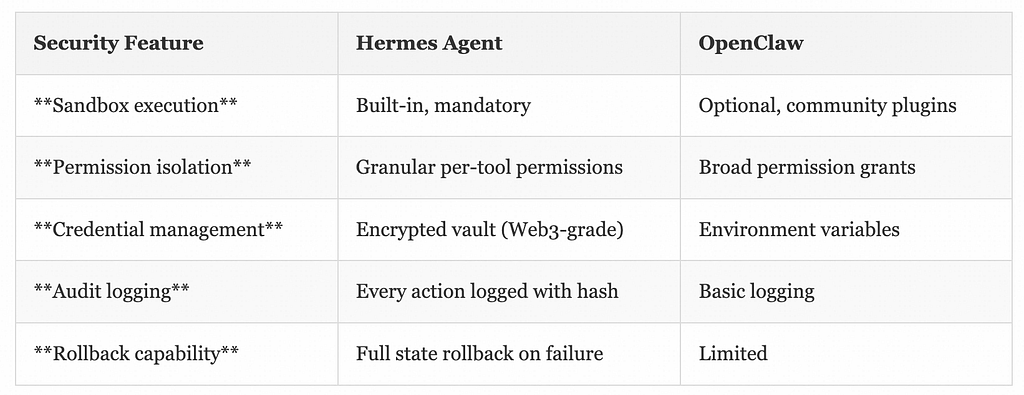
Nous Research’s Web3 background isn’t just a fun origin story — it’s a structural advantage. In Web3, a single permission error can drain millions of dollars from a smart contract. This paranoia translates directly into Hermes Agent’s security model:
v0.8.0: The Intelligence Release
The April 8 release — dubbed “The Intelligence Release” — brought several game-changing features:
- Background Task Auto-Notification: Long-running tasks now notify the agent upon completion, enabling true asynchronous workflows
- Free MiMo v2 Pro + Gemma 4: Access to powerful models at zero cost
- Live Model Switching: Switch between models mid-conversation without losing context — a first for any agent framework
- Google AI Studio Native Integration: Direct access to Google’s model ecosystem
- Enhanced MCP Server Management: Better tool orchestration and discovery
- Multi-Platform: Telegram, Discord, Slack, WhatsApp, and Lark (Feishu)
Hermes vs OpenClaw: Two Philosophies of AI Agency
The comparison isn’t about which is “better” — it’s about two fundamentally different visions of what an AI agent should be:
II. The Engineering Paradigm Evolution Hermes Ignited
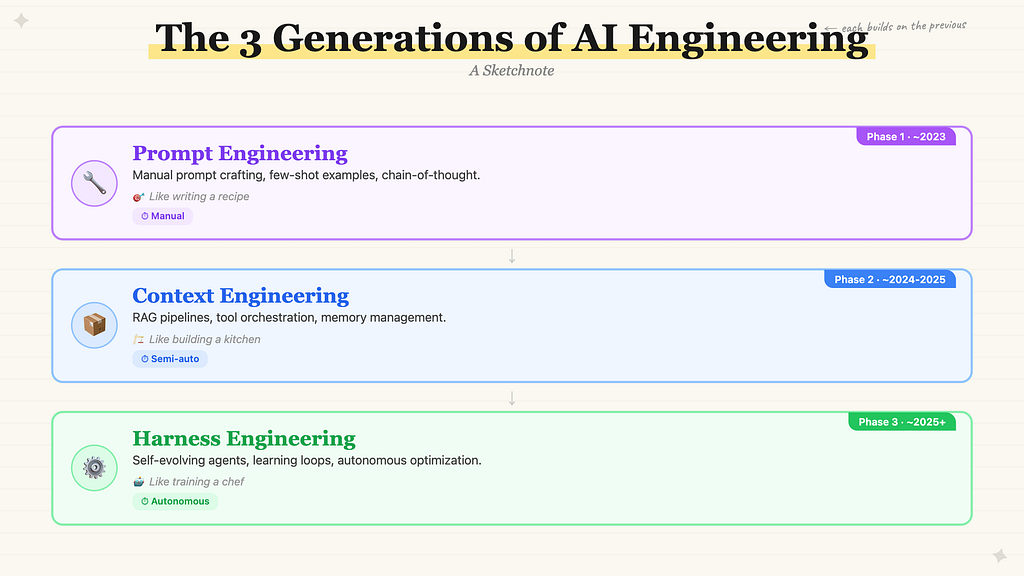
Hermes Agent isn’t just a product — it’s a signal that AI engineering itself is undergoing a fundamental transformation. We’re witnessing the third paradigm shift in how humans work with AI systems.
2.1 Prompt Engineering (Generation 1): The Age of Guesswork
When ChatGPT launched in late 2022, “Prompt Engineering” became the hottest skill in tech. The idea was simple: craft the perfect input to get the perfect output.
Here’s what prompt engineering looks like in practice — iterating on a simple email-writing task:
The fundamental limitation: Prompt Engineering is artisanal. Every task requires hand-crafted instructions. Knowledge doesn’t accumulate. The 100th prompt you write isn’t meaningfully better than your 10th — you’re just more experienced at guessing.
As Andrej Karpathy noted in January 2026: “Prompt Engineering is not engineering. It’s guesswork with a feedback loop.”
2.2 Context Engineering (Generation 2): The Age of Memory Management
By 2025, the industry realized that the bottleneck wasn’t the prompt — it was the context. Context Engineering emerged as the discipline of managing what information the AI has access to, when, and how.
The context window explosion made this both possible and necessary:
But longer context isn’t free. Due to the Transformer architecture’s attention mechanism, computational complexity grows quadratically with sequence length. This creates a direct link to Token economics:
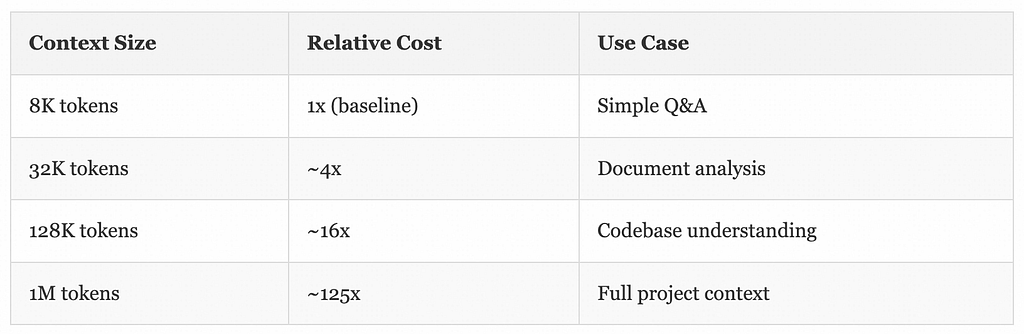
Real-world example: A customer service platform reduced its Token costs by 80% by implementing Context Engineering principles:
Context Engineering is a massive improvement over Prompt Engineering. But it still requires human architects to design the retrieval pipelines, manage the memory systems, and decide what context is relevant. The AI itself doesn’t learn to manage its own context.
2.3 Harness Engineering (Generation 3): The Age of Guided Self-Evolution
This is where Hermes Agent enters the picture — and where the paradigm shift gets truly interesting.
Harness Engineering is a term emerging from the Hermes community (and articulated by researchers like Richard Hightower on Medium) to describe a fundamentally new approach: instead of humans engineering prompts or contexts for AI, humans design harness systems — boundaries, guardrails, and feedback loops — within which AI agents autonomously evolve.
The metaphor is deliberate: a harness doesn’t tell a horse where to go. It provides structure and safety while allowing the horse to navigate terrain on its own.
The same task across three paradigms:
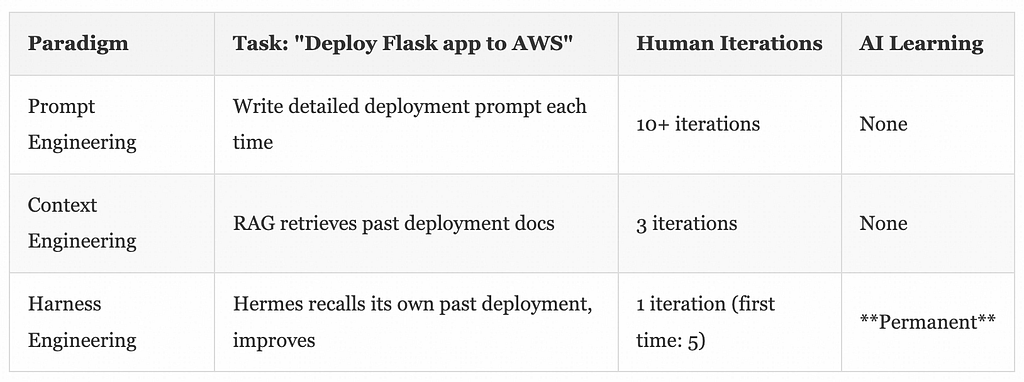
This is the shift from “teaching AI to do things” to “letting AI teach itself to do things” — within human-defined safety boundaries. And it’s why Hermes Agent matters far beyond its GitHub star count.
III. Why Hermes and OpenClaw Are Growing So Fast
The explosive growth of both Hermes Agent and OpenClaw isn’t accidental. It reflects three deeper structural shifts in the AI industry.
3.1 From Parameter Worship to Engineering Paradigm
For years, the AI industry was obsessed with model size. Bigger models meant better performance. But 2025–2026 shattered this assumption.
The price collapse tells the story:
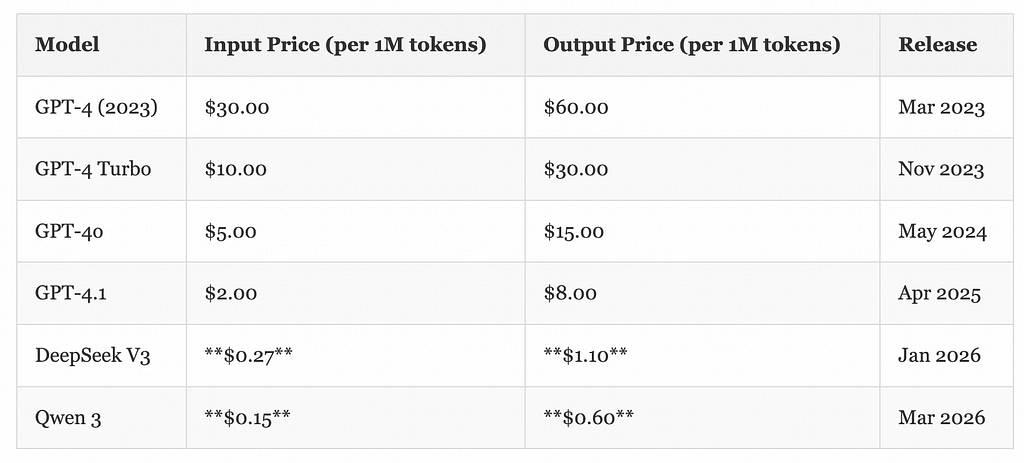
When the price of intelligence drops 111x in three years, the model itself stops being the competitive moat. The moat shifts to:
- How you orchestrate multiple models (agent frameworks)
- How you manage context and memory (engineering paradigm)
- How you deploy AI into real business workflows (integration)
This is exactly why agent frameworks like Hermes and OpenClaw are exploding. They’re the new battleground.
3.2 The Certainty-Uncertainty Bridge
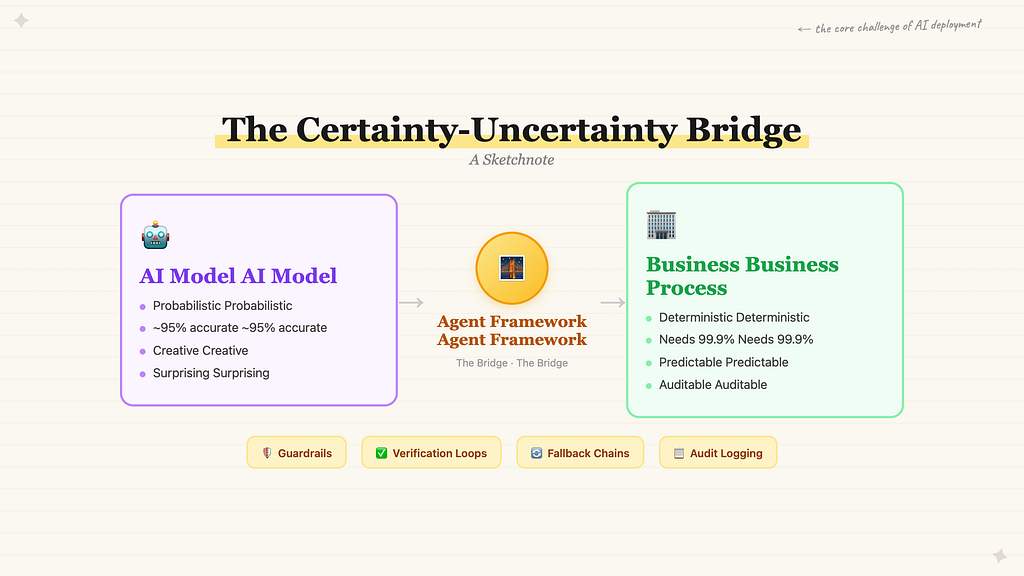
Every enterprise that tries to deploy AI agents hits the same fundamental problem: AI output is probabilistic, but business processes are deterministic.
Real-world example: A customer service agent needs to handle refund requests. The LLM can understand the request with ~95% accuracy. But the business requires:
- 99.9% accuracy in identifying refund eligibility
- 100% compliance with refund policies
- Complete audit trail for every decision
- Graceful escalation when uncertain
The agent framework bridges this gap through: — Guardrails: Hard rules that override AI decisions when necessary — Verification loops: AI proposes, framework validates — Fallback chains: If model A fails, try model B, then escalate to human — Audit logging: Every decision recorded with reasoning
Neither Hermes nor OpenClaw has fully solved this problem. But Hermes’s self-improving loop has an interesting advantage: over time, it learns which situations require escalation and which it can handle autonomously, effectively narrowing the gap through experience.
3.3 Growth Anxiety in Traditional Business
The third driver is less technical and more economic: traditional businesses are desperate for AI-driven growth.
In China, this urgency is particularly acute:

Companies are consuming massive amounts of Tokens but struggling to translate that consumption into business value. They’re in the “pile Tokens” phase — throwing compute at problems — rather than the “refine Tokens” phase — using agent frameworks to maximize intelligence per Token.
This is the market opportunity that both Hermes and OpenClaw are racing to capture.
IV. Traditional Business Must Embrace the Change
4.1 Hermes’s Differentiated Value for Enterprises
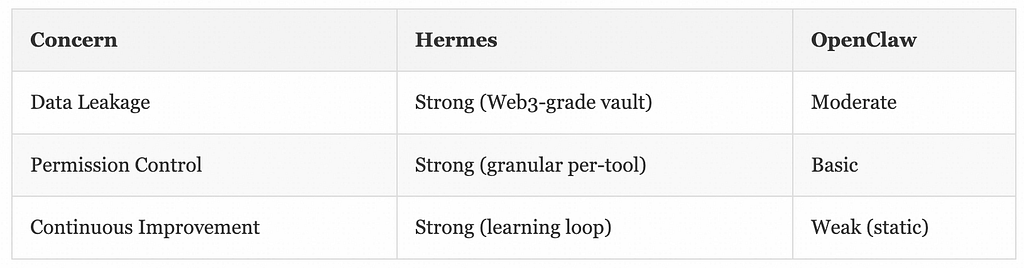
While OpenClaw has built a formidable ecosystem with 50+ platform integrations and a thriving plugin marketplace, Hermes Agent offers something that enterprises increasingly demand: built-in security and autonomous improvement.
The top three concerns enterprises cite when evaluating AI agents:
Example: A Financial Services Firm Evaluating AI Agents
Consider a mid-size investment bank that wants to deploy an AI agent for internal research. Their requirements:
- Must not leak proprietary data → Hermes’s encrypted vault and self-hosted architecture wins
- Must improve over time → Hermes’s learning loop means the agent gets better at finding relevant research
- Must integrate with Bloomberg Terminal → OpenClaw’s plugin ecosystem has a Bloomberg connector; Hermes doesn’t (yet)
- Must pass compliance audit → Hermes’s hash-verified audit logs are purpose-built for this
The verdict isn’t clear-cut — it depends on priorities. But for security-sensitive, long-running deployments, Hermes has a structural advantage.
4.2 The Landing Challenges Remain Enormous
Despite the excitement, deploying AI agents in production remains brutally hard:
Challenge 1: Security & Permissions Can the agent execute database queries? Send emails on behalf of employees? Approve purchase orders? Every capability granted is a potential attack surface. Most enterprises default to “deny everything” — which makes the agent nearly useless.
Challenge 2: Interaction Experience Users expect agents to be as natural as talking to a colleague. Reality: agents hallucinate, misunderstand context, and occasionally produce confidently wrong answers. The gap between expectation and reality is the #1 reason for enterprise AI agent project failures.
Challenge 3: Integration Complexity Legacy systems weren’t designed for AI agents. Connecting an agent to a 20-year-old ERP system requires custom API adapters, data format transformations, authentication bridges, and error handling for edge cases that the original system designers never imagined.
OpenClaw’s contribution: By building a massive plugin ecosystem and lowering the integration barrier, OpenClaw made it possible for thousands of developers to experiment with AI agents. This “let a thousand flowers bloom” approach accelerated the entire industry — even if many of those flowers wilted in production.
These three challenges form the Deployment Trilemma: you can optimize for any two, but rarely all three simultaneously.
V. The Agent War
5.1 The US-China Divergence
The most fascinating macro-trend in AI right now is the strategic divergence between the United States and China:
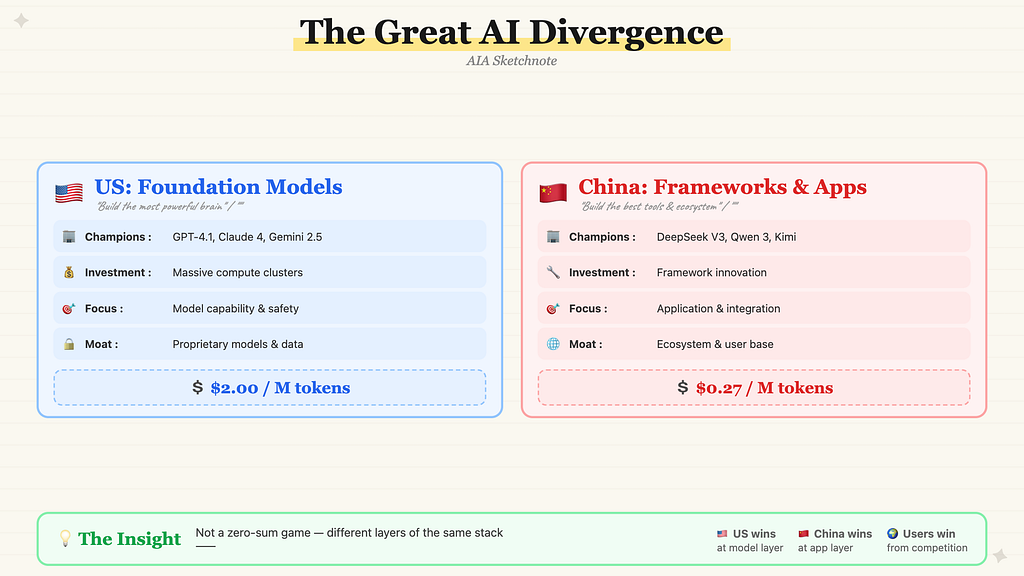
This isn’t a judgment of right vs. wrong — it’s a natural supply chain division. The US builds the “engines” (foundation models), China builds the “vehicles” (agent frameworks, applications, deployment infrastructure). Both are necessary. Neither is sufficient alone.
But this division creates a strategic vulnerability for both sides: — US risk: Building increasingly powerful models that nobody knows how to deploy effectively — China risk: Building sophisticated agent frameworks that depend on foreign foundation models
5.2 China’s Domestic Acceleration
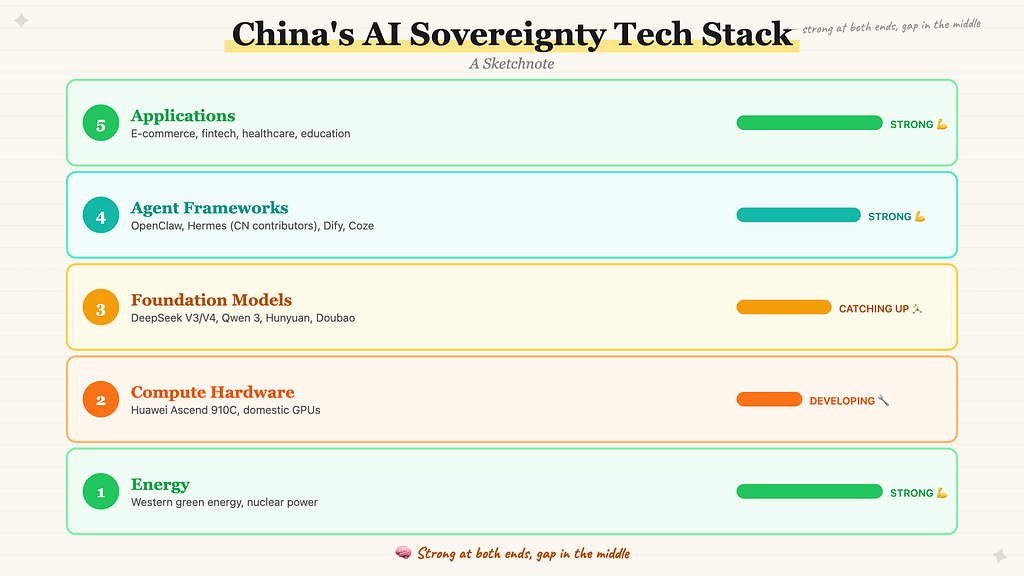
China is moving aggressively to close the foundation model gap:
DeepSeek V4, expected in late April 2026, is the most anticipated release. If it achieves GPT-4.1-level performance — which industry insiders consider likely based on V3’s trajectory — it would mean:
- Domestic model + domestic chip + domestic energy = a fully sovereign AI stack
- Combined with China’s framework dominance, this creates a self-contained AI ecosystem
- The “engine dependency” risk diminishes significantly
5.3 China’s Scenario Advantage
China’s greatest AI asset isn’t its models or frameworks — it’s its scenarios.
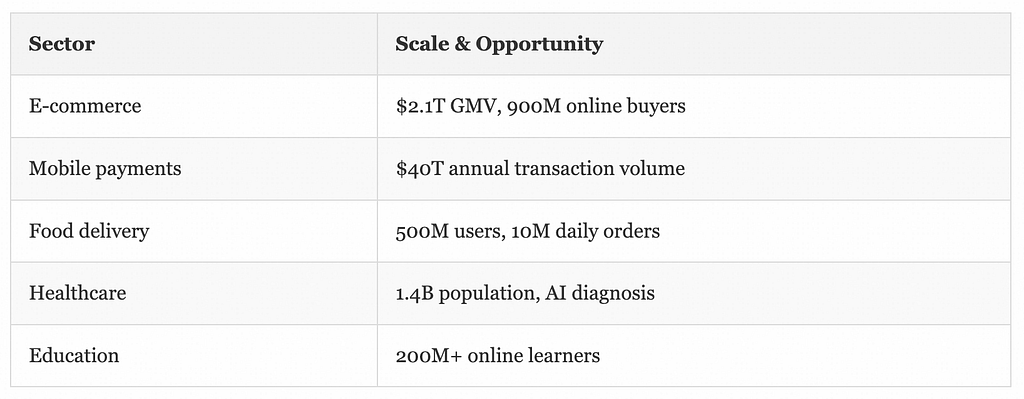
SectorScale & OpportunityE-commerce$2.1T GMV, 900M online buyersMobile payments$40T annual transaction volumeFood delivery500M users, 10M daily ordersHealthcare1.4B population, AI diagnosisEducation200M+ online learners
This scenario richness is why Chinese AI companies can iterate so fast. They have real users, real data, and real feedback loops at a scale that no other country can match.
5.4 Clear-Eyed About Weaknesses
But intellectual honesty demands acknowledging where China lags:
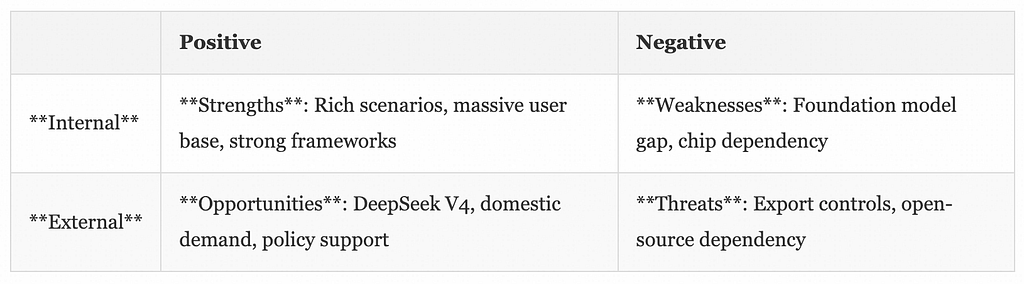
The most concerning weakness is the architecture innovation gap. The Transformer architecture — which powers every major LLM — was invented at Google. The leading candidates for post-Transformer architectures (Mamba by Tri Dao, RWKV by BlinkDL, State Space Models by various US/European labs) are all led by overseas researchers. If the next architectural breakthrough happens outside China, the current framework advantage could be neutralized.
The open-source ecosystem also presents a paradox: China benefits enormously from open-source AI (DeepSeek itself builds on open research), but contributes proportionally less to foundational research. This “borrowing” model works in the short term but is unsustainable if the open-source community perceives it as one-directional.
VI. Conclusion: The Harness Is in Your Hands
On February 25, 2026, a Web3 team pushed a repository to GitHub. Forty-two days later, the AI agent landscape had permanently changed.
But the Hermes Agent story isn’t really about Hermes. It’s about a tectonic shift in how we relate to artificial intelligence.
For four years — from ChatGPT’s launch in 2022 to early 2026 — we treated AI as a tool to be instructed. We wrote prompts. We engineered contexts. We told AI what to do, step by step, every single time.
Hermes Agent represents the moment we started asking a different question: What if we stopped telling AI what to do, and instead designed systems that let AI learn what to do?
This is the essence of the paradigm shift from Prompt Engineering to Context Engineering to Harness Engineering:
The Agent War between Hermes and OpenClaw is just the opening skirmish. The real battle is between two visions of the future:
- A future where AI agents are tools — powerful but static, requiring constant human guidance
- A future where AI agents are partners — evolving, learning, and growing alongside the humans and organizations they serve
Neither vision is wrong. Both will coexist. But the organizations and individuals who learn to harness AI — to design the boundaries within which intelligence can safely evolve — will define the next era of technology.
The harness is in your hands. The question is: what will you let your AI become?
Data sources: Nous Research GitHub, OpenClaw GitHub, Stanford AI Index 2025, JP Morgan AI Research, IDC China AI Market Report, ByteDance/Volcengine public disclosures, NVIDIA GTC 2026, Reuters, 36Kr, People’s Daily. All data cited from public reports as of April 2026.
About the Author
TechSilk bridges the Chinese and Western tech ecosystems. Follow us for deep analysis on AI, open source, and the forces reshaping global technology.
The Agent War Has Begun: How Hermes Agent’s Self-Evolution Is Reshaping AI Engineering was originally published in Towards AI on Medium, where people are continuing the conversation by highlighting and responding to this story.