DevOps didn’t fail. It outgrew itself.
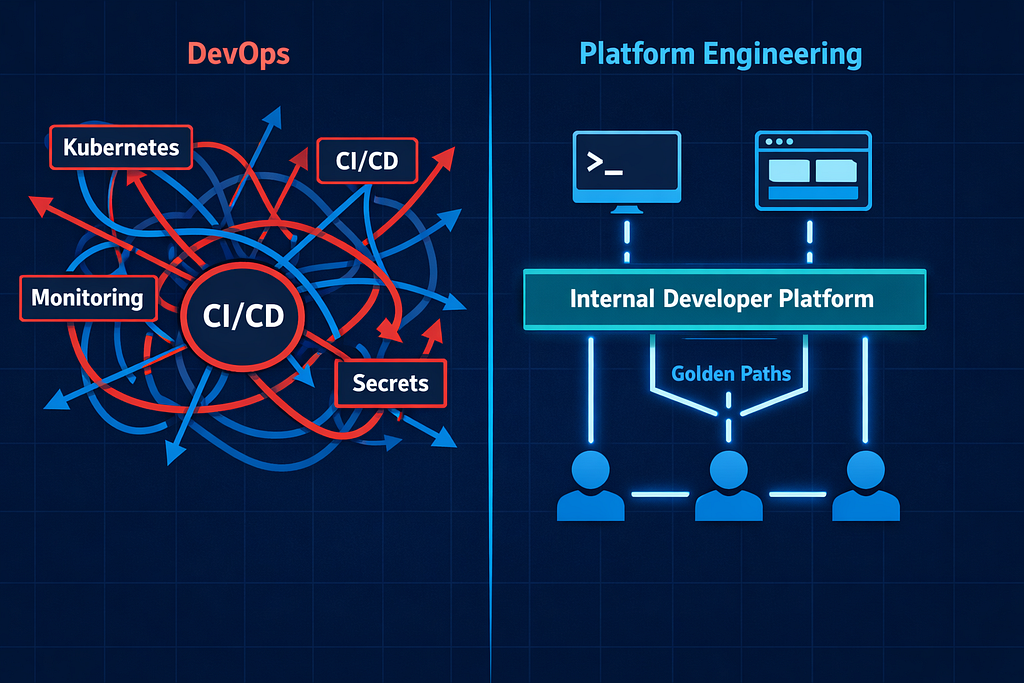
There’s a quiet revolution happening inside engineering organizations right now — and if you’re a developer, you’ve probably already felt it.
For over a decade, DevOps was the gold standard. Break down the silos. Automate the pipelines. “You build it, you run it.” It was brilliant. It changed everything.
But somewhere along the way, “you build it, you run it” quietly turned into “you build it, you run it, you monitor it, you debug the Kubernetes manifest at 2 AM, you manage the Terraform state, you rotate the secrets, you update the Helm charts, and you also write features — eventually.”
That’s not collaboration. That’s cognitive overload.
And that’s exactly why 2026 is the year platform engineering stops being a buzzword and starts becoming the default operating model for serious engineering teams.
I’m a computer engineer, and I’ve watched this shift unfold from the infrastructure side. So let’s break down what’s actually happening, why DevOps is hitting its limits, what platform engineering really is, and whether your team should care.
The Problem Nobody Wants to Admit About DevOps
DevOps emerged in 2009 as a cultural movement. The idea was simple and powerful: developers and operations teams should stop throwing code over the wall to each other and start collaborating. Share responsibility. Automate everything. Ship fast and fix fast.
And it worked. Beautifully. For years.
But here’s what happened as companies scaled: the toolchains exploded. A modern cloud-native stack in 2026 might include Kubernetes, Docker, Terraform, Helm, ArgoCD, GitHub Actions, Prometheus, Grafana, Vault, Open Policy Agent, multiple cloud providers, and a dozen internal scripts held together with hope and YAML.
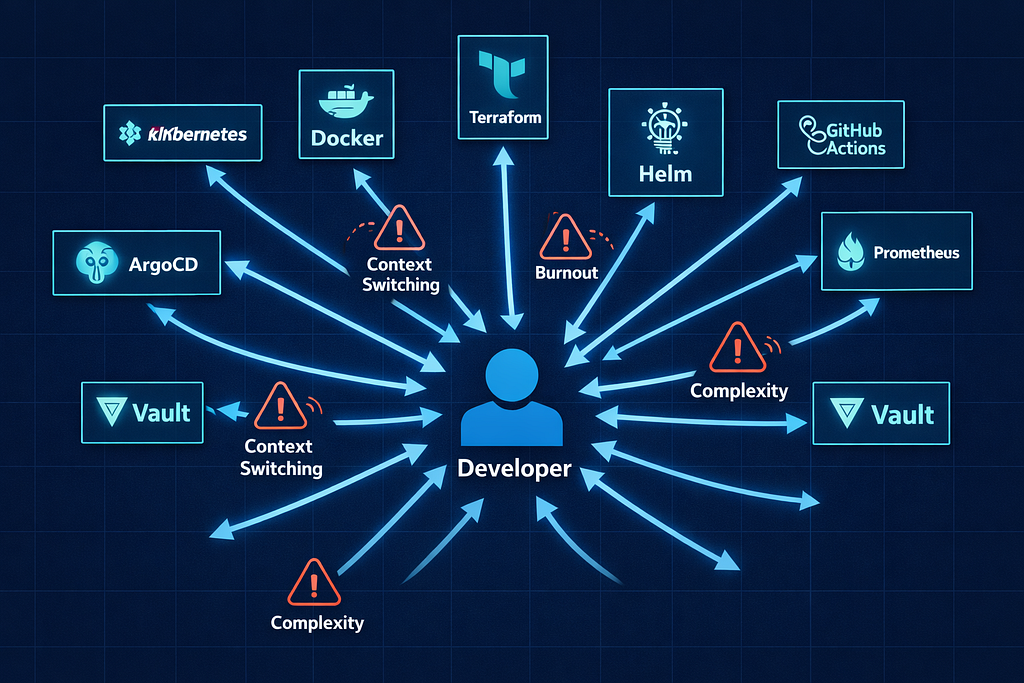
Every developer on the team is expected to understand all of this. Not just their application code — the entire operational stack beneath it.
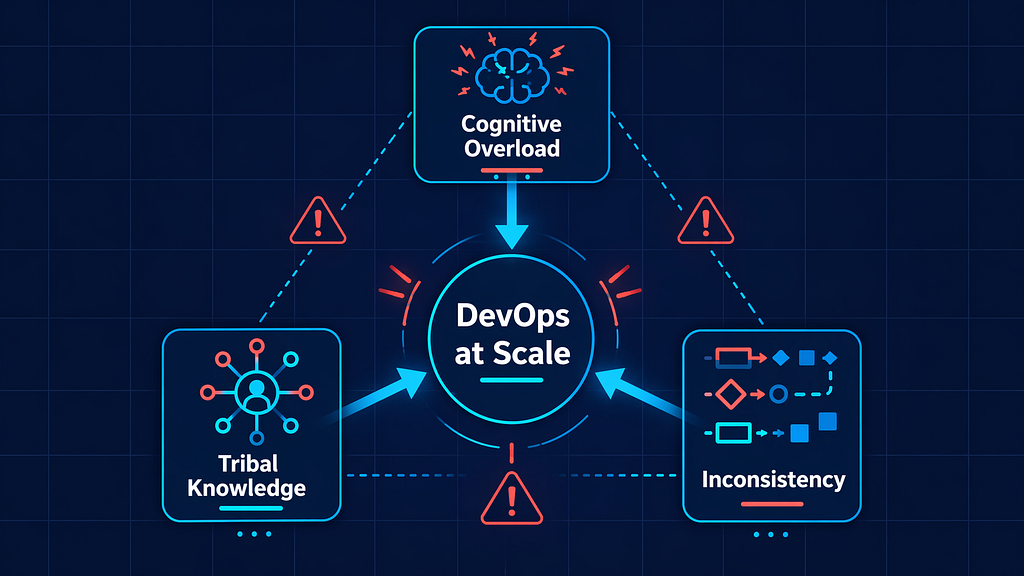
The result? Three problems that DevOps alone can’t solve:
1. Cognitive overload. Developers spend more time wrestling with infrastructure than writing business logic. Every tool switch costs 15–23 minutes of refocusing time. Multiply that across an organization and entire workdays vanish into context switching.
2. Tribal knowledge. Infrastructure expertise concentrates in a handful of senior engineers who become the default escalation point for everything — deployments, permissions, incidents, architecture decisions. When those people leave, the knowledge leaves with them.
3. Inconsistency at scale. When every team makes its own infrastructure choices, you end up with dozens of slightly different CI/CD pipelines, deployment patterns, and security configurations. Governance becomes a nightmare. Onboarding new engineers takes weeks instead of days.
DevOps gave teams autonomy. But autonomy without guardrails, at scale, creates chaos.
So What Is Platform Engineering, Really?
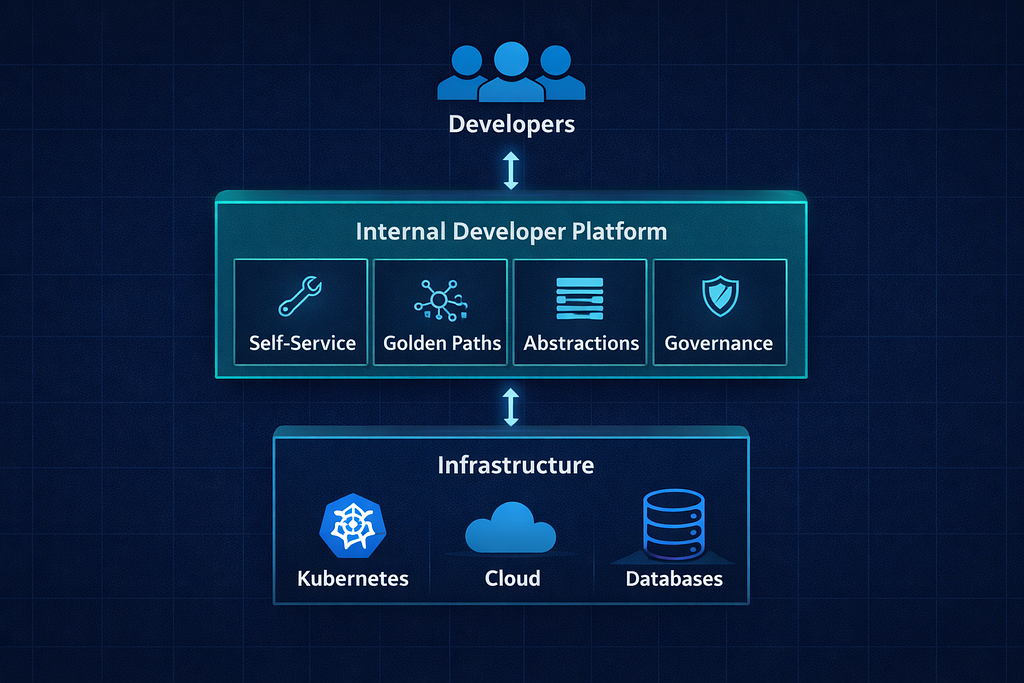
Platform engineering is the discipline of building Internal Developer Platforms (IDPs) — centralized, self-service systems that give developers everything they need to build, deploy, and operate applications without drowning in infrastructure complexity.
Here’s the simplest way I can explain it:
DevOps says: “Developers and operations should collaborate and share tools.”
Platform engineering says: “Let’s build a dedicated team that creates a product — a platform — that makes collaboration effortless.”
The key word is product. A platform engineering team treats its internal developer platform the same way a product team treats a customer-facing application. It has a roadmap. It has users (developers). It has feedback loops. It has a goal: make developers’ lives easier so they can focus on what matters — shipping features.
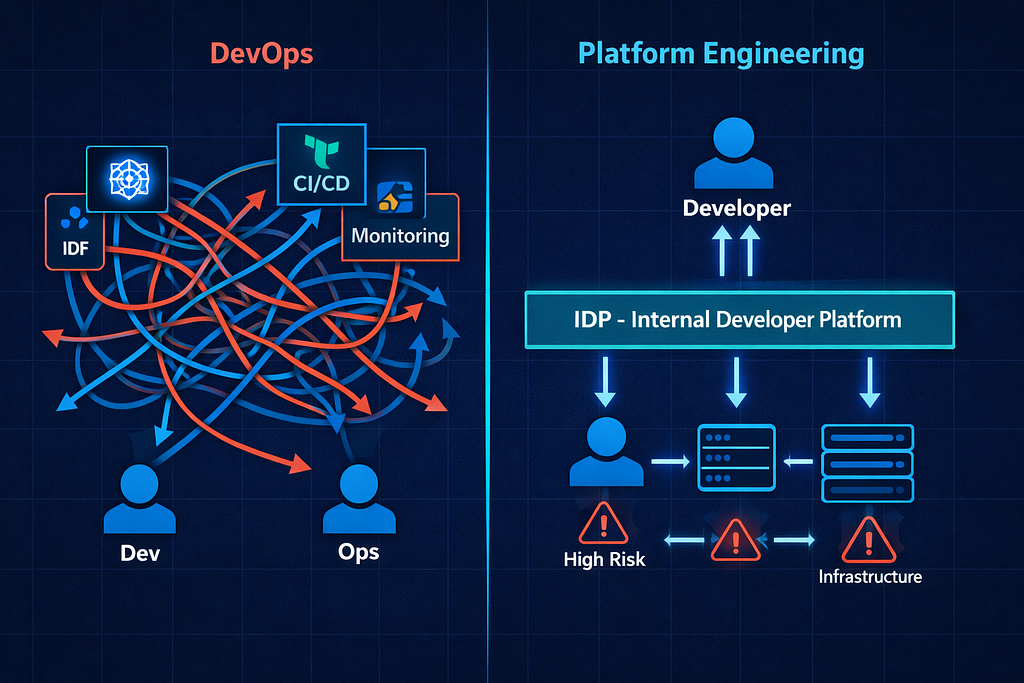
What does an IDP actually look like in practice? It typically includes:
Self-service infrastructure. A developer can spin up a staging environment, provision a database, or deploy a service in minutes — through a portal or a CLI — without filing a ticket or waiting for ops.
Golden Paths. These are opinionated, pre-built workflows that represent the “recommended way” to do things. Need to deploy a new microservice? Follow the golden path: it handles the container build, the Kubernetes config, the CI/CD pipeline, the monitoring setup, and the security scanning — all baked in.
Abstracted complexity. Developers don’t need to write raw Terraform or Kubernetes manifests. The platform exposes high-level, simple interfaces that hide the infrastructure details. You describe what you want; the platform figures out how.
Built-in governance. Security policies, compliance checks, and best practices are embedded directly into the platform. Every service deployed through the IDP is automatically compliant — no manual audits, no scattered policies.
The Kitchen Analogy That Makes It Click
Abby Bangser, a well-known platform engineering advocate, used a brilliant cooking analogy that I think captures this perfectly. Let me build on it:
Traditional IT (pre-DevOps): You want to cook dinner, but you have to submit a request for ingredients and tools. Someone in provisioning might send you a frying pan — but it could take days, and it might not be the right size. You wait. You’re frustrated. You make do.
DevOps: You get access to the full kitchen. You can grab any ingredient, use any tool, cook anything you want. Freedom! But now you have to maintain the kitchen. You’re growing your own herbs, forging your own pans, cleaning the oven, and still expected to cook a great meal. It’s empowering — and exhausting.
Platform engineering: A dedicated team designs and maintains a world-class kitchen. The herbs are pre-grown and organized. The pans are selected and maintained. The oven is pre-heated. The recipes (golden paths) are tested and optimized. You walk in, grab what you need, and focus entirely on cooking an amazing meal.
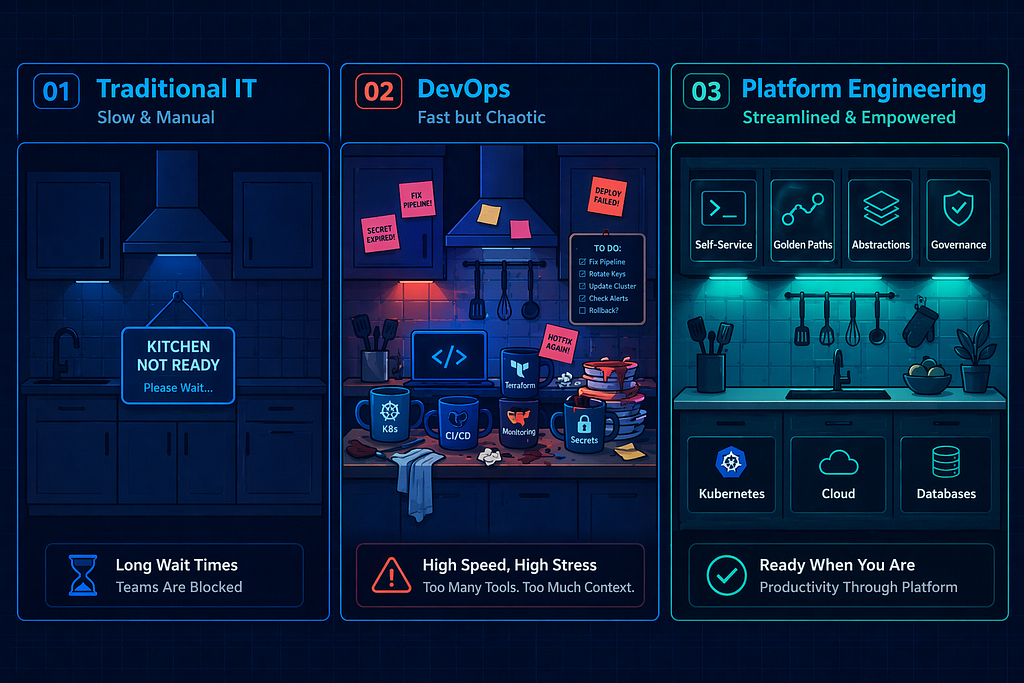
You still own the cooking. But the kitchen is no longer your problem.
What a Platform Engineer Actually Does
This raises an obvious question: if platform engineers aren’t DevOps engineers with a new title, what are they?
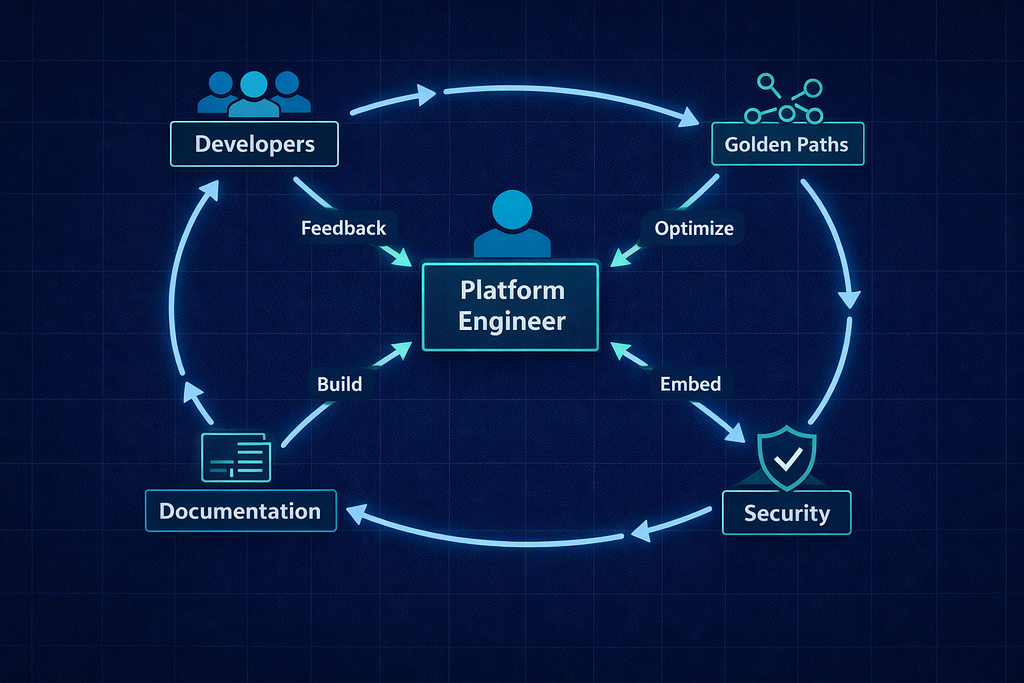
Platform engineers are internal product builders. Their “customers” are the developers inside their own company. Their daily work involves:
Talking to developers to understand pain points, bottlenecks, and unmet needs. What’s slowing them down? What tasks are repetitive? Where do they get stuck?
Designing and building the IDP — creating self-service interfaces, automating provisioning, building templates, writing documentation, and integrating tools into a cohesive platform.
Maintaining golden paths — continuously improving the recommended workflows based on usage data and developer feedback.
Embedding security and compliance into the platform so that governance is automatic, not an afterthought.
Evangelizing the platform internally — onboarding teams, running demos, gathering feedback, and iterating. Just like any product team would.
This is a fundamentally different job than a DevOps engineer who manages pipelines and responds to incidents for specific applications. Platform engineers work across the entire organization, building infrastructure that every team benefits from.
And the market reflects this. Platform engineers now command an average salary of roughly $193,000 in North America — about 27% higher than DevOps professionals. That premium reflects the specialized skills and strategic impact of the role.
“Does This Mean DevOps Is Dead?”
No. And anyone telling you that is selling something.
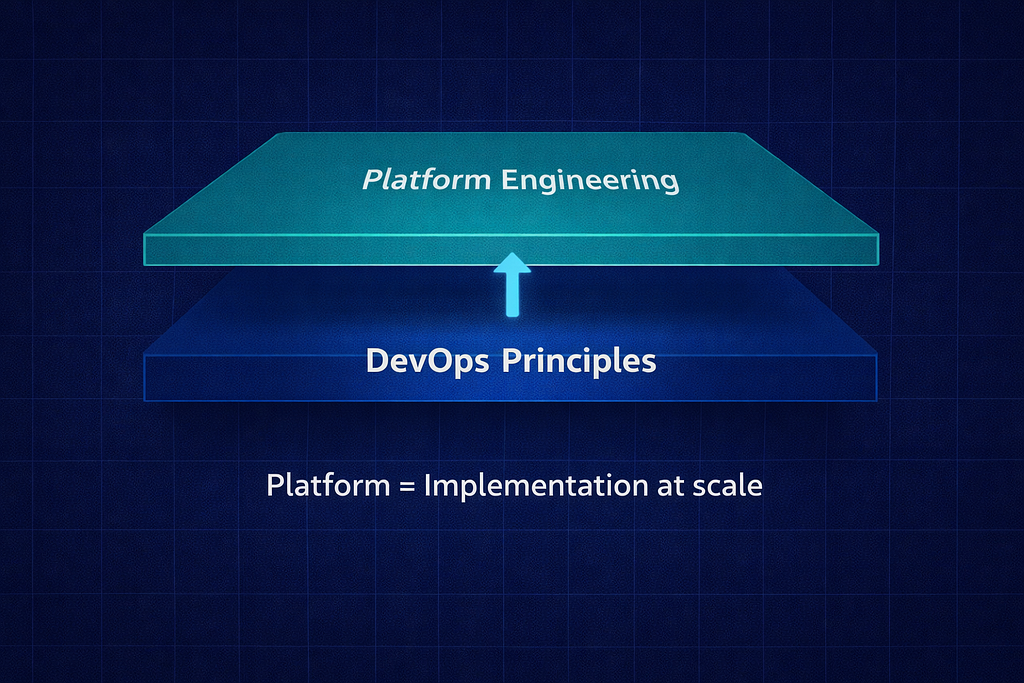
Platform engineering doesn’t replace DevOps. It evolves it. DevOps principles — collaboration, automation, continuous improvement, shared ownership — are still at the core. Platform engineering is the implementation layer that makes those principles sustainable at scale.
Think of it this way:
DevOps is the philosophy. Platform engineering is the product that makes the philosophy work when you have 50, 500, or 5,000 developers.
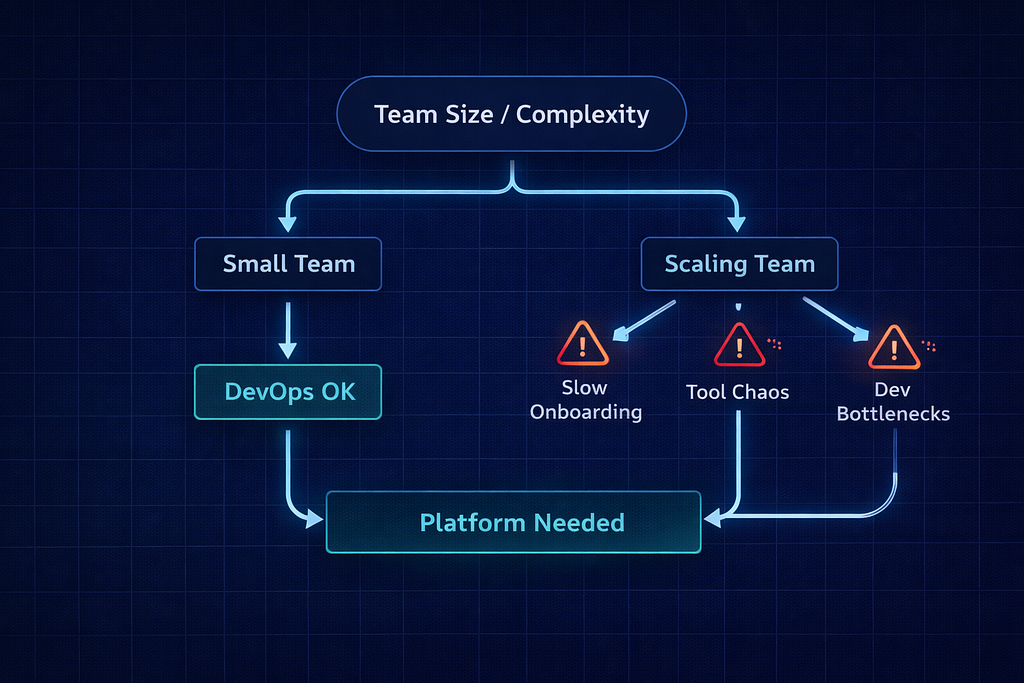
Small teams (under 20 developers) often don’t need a dedicated platform team. DevOps practices with shared tooling work fine at that scale. But once you cross 50+ developers, the complexity compounds. Pipelines diverge. Standards erode. Knowledge silos form. That’s when platform engineering becomes not just helpful — but necessary.
The organizations succeeding in 2026 aren’t choosing between DevOps and platform engineering. They’re using platform engineering to make DevOps sustainable.
The Numbers That Tell the Story
The shift isn’t just philosophical — it’s measurable:
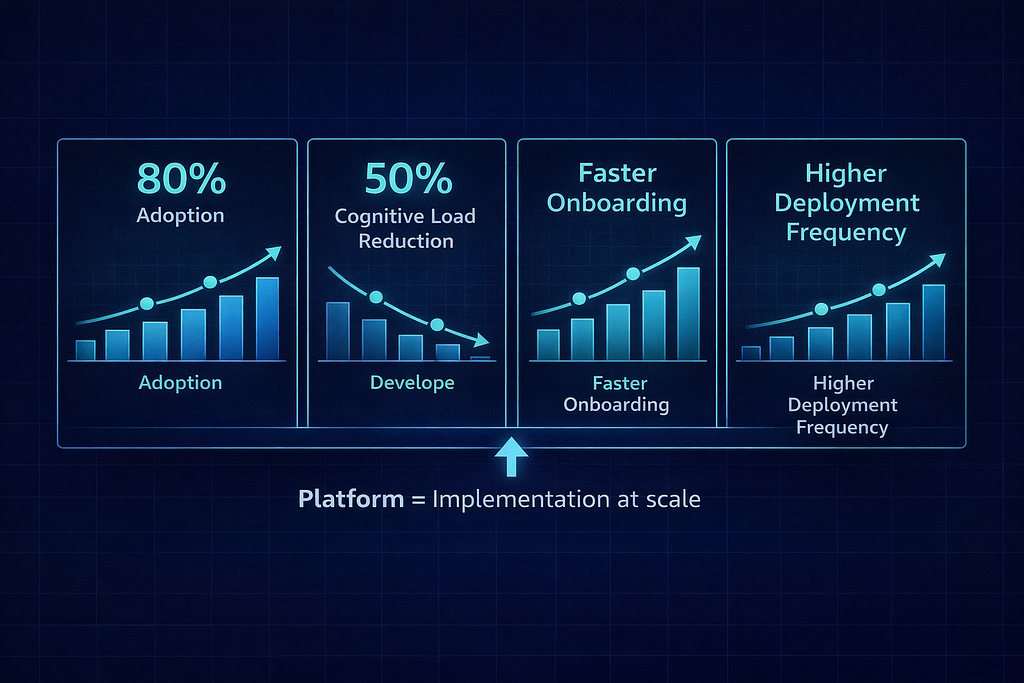
Gartner predicts that by the end of 2026, over 80% of large software engineering organizations will have dedicated platform engineering teams — up from 45% in 2022.
High-maturity platform teams report 40–50% reductions in developer cognitive load — meaning developers spend significantly less time on infrastructure and more time on features.
Developer onboarding drops from weeks to days when a mature IDP provides self-service environments and pre-configured toolchains.
Deployment frequency increases because golden paths remove the friction that slows teams down — inconsistent configs, manual approvals, and scattered tooling.
The salary premium for platform engineers over DevOps engineers (roughly 27%) signals that the market values this specialization — and expects it to grow.
What Comes Next: AI Meets Platform Engineering
Here’s the frontier that’s emerging right now in 2026: AI-powered platforms.
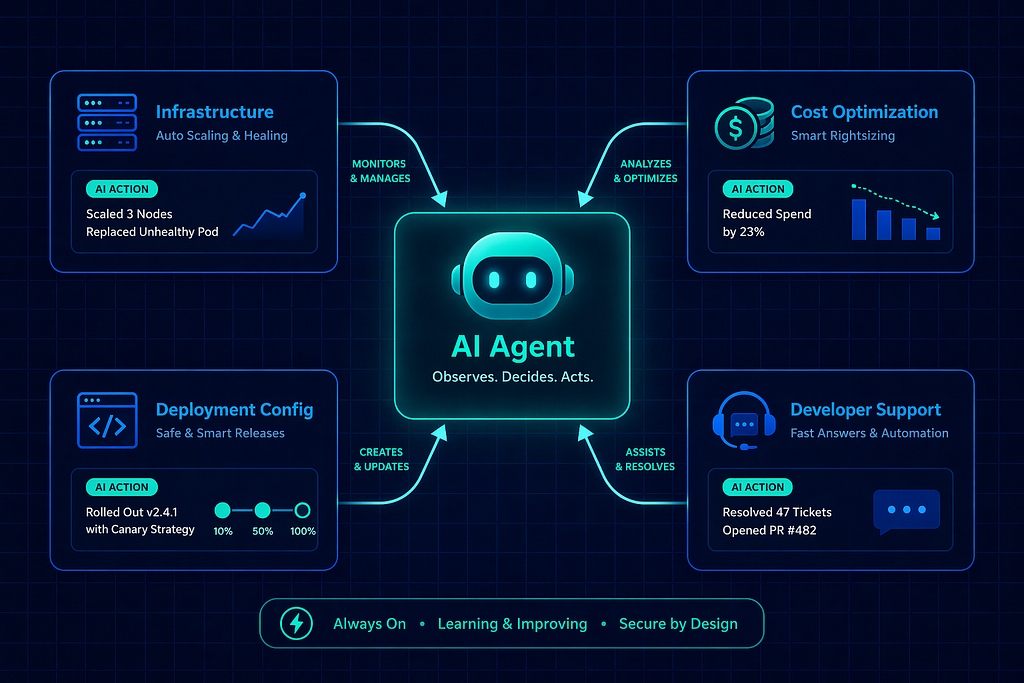
Platform engineering teams are beginning to integrate AI agents directly into their IDPs. These agents can:
- Auto-heal infrastructure — detect anomalies, diagnose root causes, and apply fixes without human intervention for routine issues.
- Optimize cloud costs (FinOps) — analyze usage patterns and automatically right-size resources.
- Generate golden paths — suggest optimized deployment configurations based on application type and team patterns.
- Accelerate onboarding — an AI assistant embedded in the IDP that answers developer questions, explains platform features, and walks through workflows.
This is still early, but the direction is clear: the IDP of the future won’t just be a self-service portal — it’ll be an intelligent system that actively helps developers make better decisions.
Should Your Team Make the Switch?
If you’re on a small team shipping a single product, traditional DevOps practices are probably serving you well. Don’t over-engineer.
But if you recognize any of these symptoms, it’s time to think about platform engineering:
- Developers spend more time on infrastructure tasks than writing code.
- Onboarding new engineers takes weeks because of tooling complexity.
- Your “DevOps experts” have become bottlenecks for every deployment question.
- Different teams use different CI/CD patterns, creating inconsistency and risk.
- Security and compliance audits are painful because policies are scattered.
- Tool switching and context changes are eating your team’s productivity.
The fix isn’t hiring more DevOps engineers. It’s building a platform that removes the need for every developer to be a DevOps engineer.
The Bottom Line
DevOps changed how we build software. Platform engineering is changing how we organize to build software.
It’s not a replacement — it’s a maturation. The same principles of collaboration, automation, and continuous improvement now live inside a centralized, product-driven platform that scales with your organization instead of against it.
In 2026, the question for engineering leaders isn’t whether to invest in platform engineering. It’s whether their internal platforms will be intentional — or accidental.
The best teams are already building. The rest are still filing Jira tickets for a staging environment.
🙌 If This Article Resonated With You…
Thank you for reading to the end! Each article takes hours of research and writing, and your support is what makes the next one possible.
Here’s how you can help — and it really does matter:
👏 Clap up to 50 times — just hold down the clap button! Each clap helps Medium’s algorithm push this article to more engineers who are navigating the same challenges.
➕ Follow me on Medium @elsa-andrea — I publish weekly deep dives on the real engineering behind AI, cloud, DevOps, and modern infrastructure. No hype. No fluff. Just how things actually work.
Your claps and follows aren’t just vanity metrics for me — they’re fuel. Every notification that someone clapped 50 times or hit follow gives me the energy to research and write the next piece. You’re literally powering this publication. 💙
Coming up next: How Data Centers Actually Work: From Cooling Systems to GPU Clusters — follow me so you don’t miss it!
Platform Engineering vs DevOps: Why Your Team Is Making the Switch in 2026 was originally published in Towards AI on Medium, where people are continuing the conversation by highlighting and responding to this story.