My Journey and What I’d Do Differently
When I first started learning n8n, I brute forced my way through the learning process. And don’t get me wrong, in a year I have learned a lot and become pretty proficient in n8n.
But if I could start over in 2026, I’d do it completely differently because back then I thought the goal was to just build AI agents as quick as possible. But what I didn’t realize is you can’t build good agents until you understand workflows.
And I think that’s where everyone goes wrong. So in this video, I’ll walk you through exactly how I’d learn n8n and AI automations in general if I had to start from scratch today step by step.
Step 1: Start With Workflows, Not AI
So, if I was starting from zero right now, the first thing that I would drill into my head is this. Do not start with AI. Start with workflows. Learn the automation fundamentals before you even think about building agents.
Most beginners skip past this part because they want to build AI agents right away because they’re cool and that’s what we’re seeing online.
But the truth is, you cannot build good agents if you don’t understand how workflows actually function. That’s essentially trying to run before you can walk.
The Three Layers of Automation
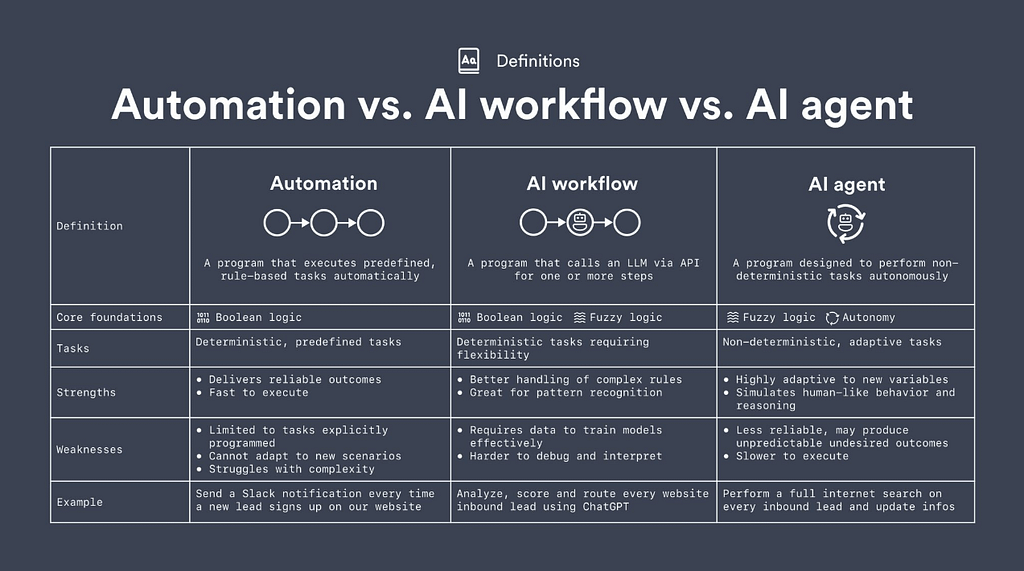
So, here’s how I would think about the three layers.
Workflows are rule-based, they’re predictable, and they’re boring, but in the best way possible.
You know what the inputs look like, so you know what the outputs will be, and you can map those variables, set your own conditions, and it runs the same way every time.
This is classic business process automation, and it has already been around for decades.
But it’s still one of the strongest ways to actually produce ROI. McKinsey found that standard workflow automation alone can deliver anywhere from 30% to 200% ROI in just year 1 with labor cost savings of 25% to 40%.
And most small businesses still do not have these basic automations in place.
So, I firmly believe that you could literally position yourself today as just an automation agency or an efficiency agency and build a really solid business without ever touching AI and drive massive results for your clients.
AI automations are then the next step up because you still have those predictable workflows, but now you can sprinkle in some intelligence and some decision-making.
Maybe you just need to use AI at the end of the workflow to personalize the email. Maybe you need it at the beginning to score support tickets as high or low priority.
These are small controlled decisions inside a larger rule-based workflow. McKinsey also estimates that about 50% of work activities and processes can be automated without using AI at all. So these AI assisted workflows do fit most use cases that a business will have.
AI agents are the top layer. These systems can make decisions, reference memory, use tools and adjust based on context. They’re super powerful, but they’re also much harder to control and they have a higher likelihood of breaking.
This is where people tend to get lost because they jump straight into these agentic workflows before they even learn variables and JSON data structures and how a basic workflow behaves.
So this would cause you to get confused, things would break and then you’d want to quit.
Workflows are deterministic and they’re much more set it and forget it than AI agents are because AI agents are nondeterministic.
As you have more and more AI, there’s more possibility for errors which means you need constant maintenance and upkeep and evaluations to make sure that the systems are actually providing value rather than just becoming a headache.
Understanding the Transition Curve
There’s one thing I want to tell you about, and it’s called the transition curve. In life, whenever you’re trying something new or you’re trying to learn something, you go through these phases.
And it’s good to be aware of them beforehand so that your expectations are aligned and you have the highest chance of success.
When you start the first time and you go to look at JSON or setting up an HTTP request or trying to prompt your agent, you’re probably going to feel overwhelmed.
The transition curve is basically the idea that you start in phase one as an uninformed optimist because you see the opportunity.
But then you become an informed pessimist in stage two because now you understand the complexities.
As you move into stage three, you hit the crisis of meaning, where you can either crash and burn, or push through into stage five as an informed optimist. And that’s where you want to be.
This isn’t just a one-time thing. In the past 12 months, I probably became an informed pessimist about 17 times. But now that you understand this whole cycle, it’s much easier to push through the crisis of meaning and continue on your way up.
Step 2: Learn the Core Building Blocks
Once you understand that foundation, you’ll want to learn the core building blocks that make every workflow actually work.
Everything in n8n comes down to data coming in and then going out.
And once you understand how the data is shaped and how it moves, the entire platform becomes way less intimidating.
JSON and Data Types
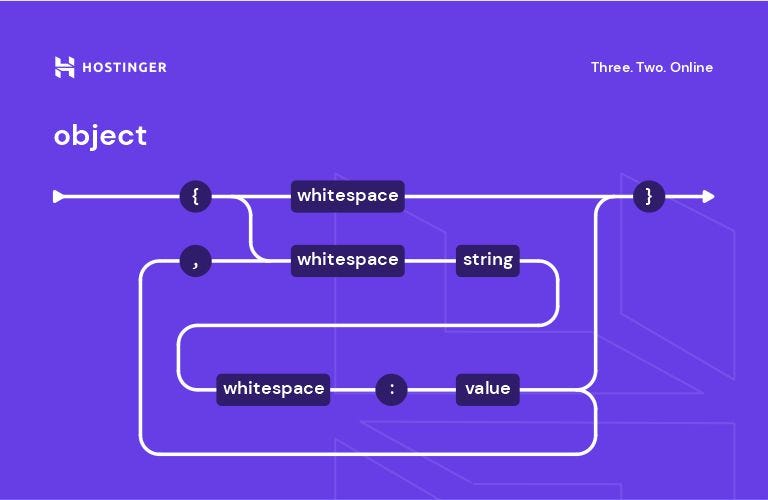
This is the language of almost everything that you’ll touch in automation. At first glance, JSON might look like code, but when you actually look closer, it’s just pairs of keys and values.
Think about online shopping, color equals blue, size equals medium, price equals $99.99. JSON is the exact same thing, just written in a specific structured format.
Once you understand how to read and navigate it, you stop guessing and start knowing exactly what data you have to work with.
APIs and HTTP Requests
This is probably the most important skill that you’ll ever have to learn in automation. This is how data moves between different tools. If you don’t understand APIs, you’ll pretty much always be limited to whatever integrations n8n gives you out of the box.
The good news is n8n has thousands of native integrations, but once you realize that those native integrations are actually just pre-built HTTP requests with a cleaner UI, everything starts to click.
You can connect to platforms that n8n does not yet support by reading API documentation and making requests yourself.
Pro tip: If you give something like ChatGPT or Claude the API documentation for any tool, it can help you set up any request you need to make.

Webhooks
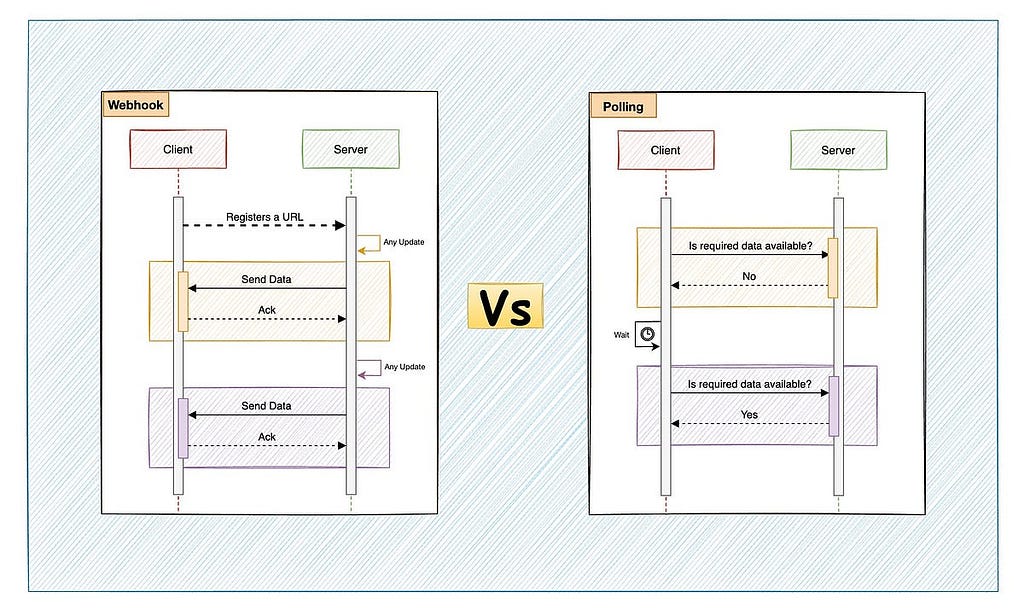
Webhooks basically flip the flow around, instead of n8n reaching out to another tool, the other tool reaches out to n8n.
This lets any workflow be triggered based on real-time events like receiving an email, getting a new Slack message, or someone filling out a form on your website.
Logic and Error Handling
Learn what an if node does, learn how loops behave, learn how to route data in different directions, and understand what the workflow does when it errors.
This is what helps you build workflows that are stable, predictable, easy to improve, and safe.
Step 3: Understand How AI Actually Thinks
Knowing how to move data isn’t enough. You need to also understand how AI itself thinks. An LLM does not know your business, your clients, or your internal processes.
At its core, all it’s doing is predicting the next word that would make sense. This is why you should never just blindly trust whatever an AI tells you.
Context Engineering
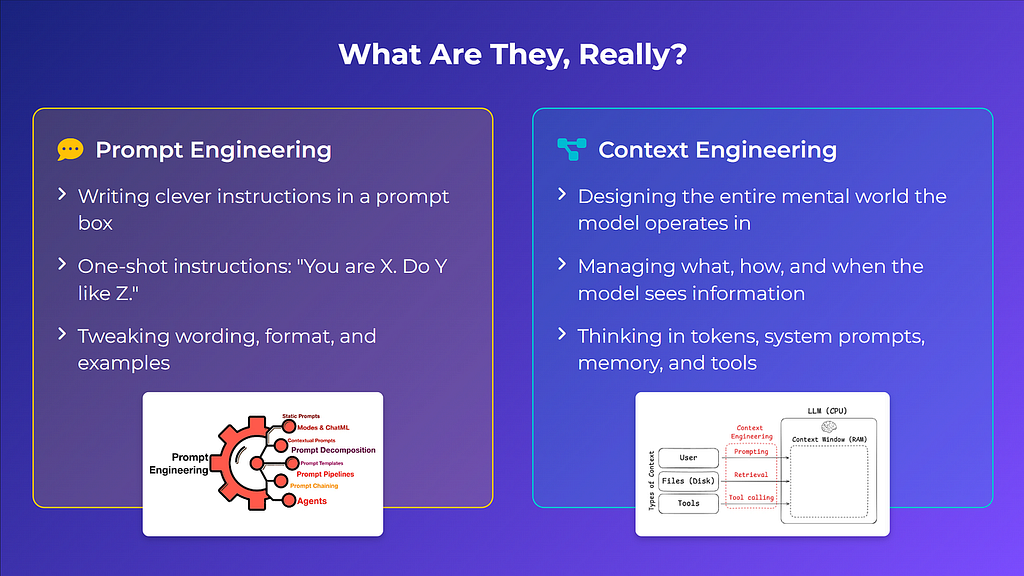
In order to actually get useful outputs, you have to learn context engineering, one of the most important skills in modern automation.
Prompt engineering is telling the model what to do, but context engineering is giving the model the information it needs so it knows how to think.
Here’s a simple analogy: a system prompt is like studying the night before an exam, it helps the model understand the rules, the tone, and the structure.
But good context is like having a cheat sheet during the exam, it gives you the exact details at the exact moment you need them. The best results come from doing both.
Step 4: Build Automations That Actually Matter
Once you’ve got that mindset, focus on building automations that bring real results or save serious time.
Build systems that run while you sleep, not systems that wait for you to click a button. The whole point of automation is leverage.
The Four Pillars of a Good Automation
Before deciding whether something is worth automating, run it through these four criteria:
- Repetitive: does it happen over and over?
- Time-consuming: does it eat up significant hours?
- Error-prone: does human involvement introduce mistakes?
- Scalable: will the value multiply as the business grows?
If a process doesn’t check at least two of those boxes, it’s probably not worth automating yet. The best automations hit all four.
Step 5: Think Like a Process Engineer
Before you even open n8n, sit down and map out the process on paper. Most people jump straight into the canvas and start dragging around nodes hoping it will eventually come together.
That’s how you end up with messy, fragile workflows that aren’t modular, aren’t scalable, and need constant refinement.
Break the business process into clear, detailed steps: Who does what? When does it happen? What triggers this? Where’s the data coming from?
What is the final outcome we care about? If you can’t explain a process clearly on paper, you can’t automate it clearly.
Slow down at the start, map the process, get agreement from everyone involved, and then go into n8n and build it. As the saying goes: “If I had 6 hours to chop down a tree, I would spend the first four sharpening the axe.”

Step 6: Test, Break, and Refine
If I could teach every beginner one mindset, it would be this: your first version will break, and that’s completely normal.
The goal in the beginning is to fail fast, learn from it, and make the system better each time.
Build MVPs First
Build proof of concepts and minimum viable products. They exist so you can get something working, even if it’s not perfect, then monitor it and fix the weak spots.
In fact, try to break your own workflows on purpose, push them to their limits, feed in edge cases, and see what happens.
Track and Log Everything
Every workflow you build should have some sort of audit log on every execution. If you can have every execution feed into a Google Sheet or an Airtable, that will help you find patterns in failures, spot errors, and build guardrails.
Your job isn’t to build something once and walk away, it’s to build something stable that stays working over time.
Step 7: Avoid Tutorial Hell — Get Your Reps In
One of the biggest traps that slows everyone down is tutorial hell. They spend all day watching videos, taking notes, and consuming content, but they never actually build anything.
You cannot learn automation by just watching someone else click buttons. Follow the tutorial, but then rebuild it yourself. Break things, debug them, try different variations.
After a while, you’ll notice that about 90% of all workflows rely on the same 15 or so core nodes, and most errors fall into the same handful of categories.
Once you master those, you can build almost anything with confidence.
When you hit an error, try to understand how to fix it yourself before going to a community forum, and when you fix it, make sure you understand why it worked. That way when it pops up again, you know exactly where to look.
Step 8: Turn Your Skills Into a Business
When you finally build with real confidence, the next logical step is turning what you’ve learned into something you can actually sell. The key is learning to speak in terms of ROI, not tech.
Clients don’t care about JSON, nodes, or how clever your workflow is. They care about three things: time saved, money saved, and better quality work.
Communicate and Prove Value
Start with MVPs that solve a clear problem. Be able to clearly communicate the business impact of any system, what time it saves, what labor cost it removes, what errors it reduces, what scale it unlocks.
And once the system is live, collect data. Track how often it runs, how much time it saves, and what outcomes it produces.
After a few months, you can show real numbers, build trust, and earn long-term relationships, and use that data for case studies to win new business.
Your job is not only to build systems that work. Your job is to communicate the value clearly and prove the value over time. That’s how you level up from being just a builder to being a long-term business partner.
If you follow that roadmap, you’ll skip years of trial and error and go from building simple workflows to launching full-on AI systems that people will happily pay for.
How I’d Learn n8n if I Had to Start Over in 2026 was originally published in Towards AI on Medium, where people are continuing the conversation by highlighting and responding to this story.