Why Google I/O 2026 Is Different This Time — Agentic AI, Unified OS, and the World’s Most Anticipated Model Drop
A deep dive into Gemini 4, Aluminium OS, Android XR, agentic AI, and the partnerships that will define the next era of computing.
The Day the Tech World Stops Scrolling
Every year, there’s one event that makes the entire tech industry hold its breath.
Not just developers. Not just investors. Everyone — product teams, AI researchers, enterprise architects, startup founders, and the casual iPhone user who just heard that Google might now be powering Siri.
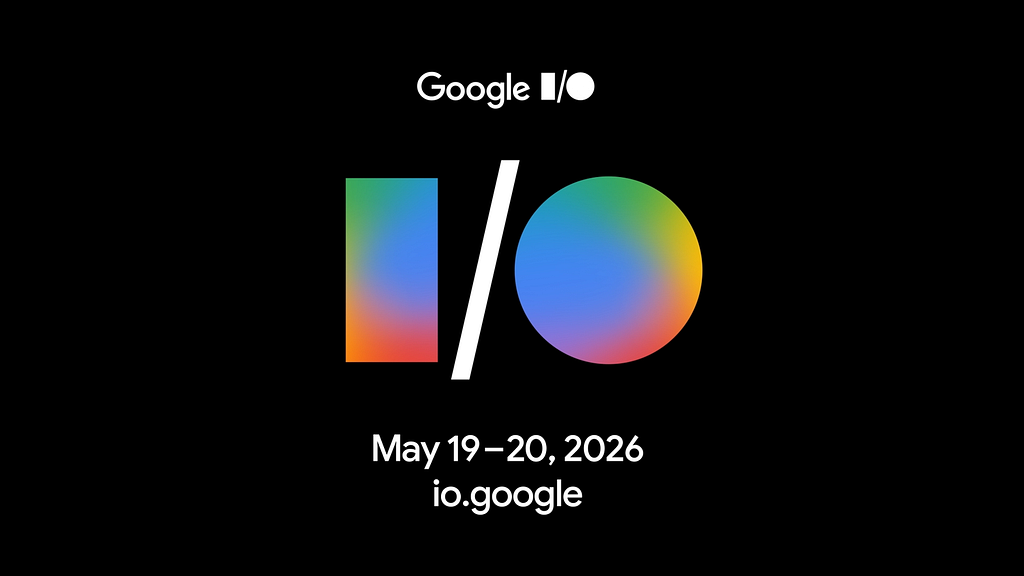
That event is Google I/O 2026, and it kicks off on May 19 at 10 AM PT from the Shoreline Amphitheatre in Mountain View, California.
But calling this a “developer conference” would be like calling the moon landing a “flight test.”
This year, Google isn’t showing up with incremental updates and polished demos. The company is arriving with what could be the most ambitious product roadmap in its 27-year history — a model that reportedly pushes reasoning benchmarks into previously unseen territory, a brand-new desktop OS, AI glasses, a unified Android ecosystem that spans phones to robots, and a partnership with Apple that could quietly reshape how 1.5 billion iPhone users experience AI every single day.
If you care about where technology is actually going — not the hype, but the substance — you need to understand what’s happening at Google I/O 2026. This is that guide.
The Setup: Why Google Is Swinging This Hard
Before the announcements, the context matters enormously.
Twelve months ago, the dominant narrative around Google AI was skeptical at best, brutal at worst. GPT-4o was stealing headlines. Claude was winning enterprise deals. Meta’s open-source models were democratizing AI inference. And Google — despite having invented the Transformer architecture that made all of this possible — was struggling to be seen as the leader it once was.
Something clearly changed.
Google enters I/O 2026 with 750 million Gemini users, $185 billion committed to AI infrastructure, and a Seventh-Generation Ironwood TPU that delivers a staggering 42.5 exaflops of compute across a full pod of 9,216 chips. The company has quietly shipped Gemini integrations across Search, Workspace, Maps, YouTube, Pixel, and now — Apple’s own devices.
The playbook is clear: Google wants to be the foundational AI layer for not one platform, but all of them.
I/O 2026 is where that strategy gets unveiled in public.
The Timeline: What’s Happening and When
Here’s your essential calendar:
- May 12, 10 AM PT — The Android Show: I/O Edition (pre-recorded, livestreamed on YouTube). Consumer-facing Android announcements land here, one week ahead of the main event.
- May 19, 10:00–11:45 AM PT — Google I/O Keynote from Shoreline Amphitheatre.
- May 19, 1:30–2:45 PM PT — Developer Keynote, diving deeper into the technical stack.
- May 19–20 — Breakout sessions covering Android, Cloud, AI, Flutter, Firebase, and more. Streamed live at io.google.
Everything is free to watch. No ticket required.
The split between May 12 and May 19 is deliberate: Android features for users first, developer and platform depth second. It’s a format Google introduced last year, and it works — it lets the consumer conversation breathe before engineers get lost in session tracks.
The Headliner: Gemini 4
Let’s start with what everyone is actually here for.
Gemini 4 is the most anticipated AI model release of 2026 from Google, and the early signals are extraordinary.
According to multiple credible reports, Gemini 4’s research variant — codenamed Deep Think — has reportedly scored 84.6% on ARC-AGI2. To understand why that number matters, a brief explanation:
ARC-AGI2 is a benchmark specifically designed to test reasoning capabilities that current AI systems genuinely struggle with. Unlike standard benchmarks that reward pattern-matching from training data, ARC-AGI2 tests genuine abstract reasoning — the ability to extrapolate rules from minimal examples, similar to how humans approach novel problems. It was designed explicitly to be “easy for humans, hard for AI.”
For context, the competition winner on Kaggle’s public ARC-AGI2 challenge reached just 24%. The best openly published result from Gemini 3 Deep Think sat at 84.6%, the same figure cited for what Gemini 4 is expected to match or exceed.
If confirmed, this puts Gemini 4 at the frontier of machine reasoning — not marketing-benchmark reasoning, but structural reasoning.
What Else Gemini 4 Is Expected to Bring
Beyond the benchmark headline, here’s what is being reported across credible sources:
- Context window: 2 million+ tokens — matching the longest available from any frontier model, opening up full-codebase reasoning, long-document analysis, and complex multi-turn agentic workflows
- Persistent memory: Long-term memory across sessions — not just the current 10-minute in-session recall from Project Astra, but genuine continuity across days and weeks
- Sub-300ms latency: Response speeds that approach real-time conversational feel
- Project Astra integration: Full integration with Google’s universal AI agent for real-time multimodal processing — camera, audio, screen, and context simultaneously
- Coding capability: A Codeforces ELO of 3,455, placing it in the top 0.2% of competitive programmers worldwide
Gemini 4 Deep Think isn’t a model for casual queries. It’s being positioned as the engine beneath agentic systems, robotics, enterprise reasoning pipelines, and — critically — the new Siri.
The most telling moments at I/O won’t come from version numbers. They’ll come from whether Google can demonstrate Gemini-powered agents completing real, multi-step tasks live on stage.
The Wildcard: Gemini Now Powers Apple’s Siri
This one deserves its own section, because the implications are still unfolding.
On January 12, 2026, Apple and Google made a joint announcement that few people saw coming: the two companies had entered into a multi-year collaboration to rebuild Siri on top of Gemini technology. Apple is paying approximately $1 billion per year for the privilege.
Here’s how the rollout is structured:
Phase 1 — iOS 26.4 (Spring 2026): The first Gemini-powered Siri features have already landed for users, delivering on-screen awareness (Siri can see and understand what’s on your screen), basic cross-app actions, contextual understanding, and email summarization. The underlying model is a custom 1.2 trillion parameter Gemini model — roughly eight times larger than Apple’s own cloud AI.
Phase 2 — iOS 27 (September 2026): Full conversational AI — 20+ exchange dialogues, complex multi-app automation, deep personalization, and reportedly, the ability to use any AI model from the App Store as Siri’s underlying brain.
Privacy architecture matters here. All Gemini processing runs through Apple’s Private Cloud Compute infrastructure, meaning Google cannot access your personal data. Apple’s model weights run within Apple’s infrastructure, not on Google’s servers.
The strategic implication is staggering. Google’s AI models, through this deal, now have reach across approximately 1.5 billion iPhone users — without requiring a single person to download the Gemini app.
Both Android and iPhone now run on Gemini. That’s not a product announcement. That’s a platform shift.
Aluminium OS: Google’s Play for the Desktop
For years, the question has been: what happens to ChromeOS?
The answer, apparently, is Aluminium OS — Google’s new unified operating system that merges Android and ChromeOS into a single, coherent desktop experience.
This isn’t a rumor anymore. Google’s VP of Android and Google Play, Sameer Samat, publicly confirmed a 2026 launch earlier this year. Android Authority recently spotted what appear to be official wallpapers from Aluminium OS, and the session schedule for I/O 2026 strongly implies a dedicated segment.
Here’s what we know about Aluminium OS so far:
- Runs all Android apps natively, without the compatibility layer friction that has plagued ChromeOS
- Gemini integrated at the system level — not as an app, but as an OS-native capability
- Designed to compete with Windows and macOS as a desktop-class operating system
- Positioned for Android-powered laptops, tablets, and desktop form factors
- Hardware partnerships expected to be announced alongside or shortly after the OS reveal
For developers, this is significant. If Aluminium OS gains traction, the fragmentation between Android and ChromeOS app development disappears. One codebase, one target, a unified Google ecosystem from pocket to desk.
For enterprises, it raises a real question: if Gemini is native to the OS and the app ecosystem is Android-compatible, does the Windows dependency start to loosen?
Android 17: The Quiet Revolution
Google has called 2026 “one of the biggest years for Android” — and Android 17 is the vehicle for that claim.
A pre-recorded Android Show dropping on May 12 will deliver the first major Android 17 previews, with the full developer picture following at I/O proper. A stable release is expected in June 2026, based on the cadence established by Android 16 last year.
Here’s what’s been surfaced ahead of the show:
- Universal App Bubbles: Streamlined multitasking across different app types and contexts
- Notification Rules & Hub Mode: Smarter management of widgets and alerts, especially on large-screen devices and tablets
- Gemini agentic abilities on Android: The OS-level hooks for letting Gemini complete multi-step tasks across apps, not just answer questions
- Wear OS improvements: Gemini-native smartwatch interactions, positioning Wear OS as an intelligent companion rather than a notifications mirror
- Performance focus: Deep under-the-hood improvements over the headline-feature approach of prior years
The deeper story with Android 17 isn’t any single feature. It’s the architectural decision to treat Android as the platform substrate for agentic AI — a foundation on which Gemini agents can act, observe, and automate across phones, tablets, watches, televisions, cars, and XR devices simultaneously.
Android XR: From Demo to Reality
In 2025, Google teased its extended reality ambitions. In 2026, those ambitions are expected to ship.
The most concrete signal: Samsung’s Android XR smart glasses, developed under the codename “Jinju,” have been nearly finalized. Android Headlines leaked renders showing a design reminiscent of Meta’s Ray-Ban collaboration — understated, wearable, designed for all-day use rather than demo stages. Pricing is expected to land between $379 and $499.
At I/O, expect:
- Official reveals or preview details on Android XR smart glasses
- Developer kit announcements and SDK previews for XR app development
- Possible Gemini-native XR experiences — real-time visual translation, contextual overlays, navigation assistance
- Updates on the Google-Samsung XR collaboration announced last year
The XR category remains fiercely competitive — Meta’s Ray-Bans have established a commercial baseline, and Apple’s Vision Pro has defined a premium ceiling. Google’s bet is that Gemini-native intelligence inside affordable glasses changes the equation entirely.
If your glasses can see what you see, hear what you hear, and respond with sub-300ms Gemini reasoning — that’s not a gadget. That’s ambient intelligence.
The Robot in the Room: Boston Dynamics Atlas + Gemini
Perhaps the most quietly significant announcement in Google’s I/O 2026 orbit: Hyundai plans to produce 30,000 Boston Dynamics Atlas robots per year, running on Gemini.
Atlas, the bipedal robot that has been evolving for years in Boston Dynamics’ labs, becomes dramatically more capable with a frontier language model at its core. Gemini provides the reasoning layer — Atlas provides the physical embodiment. The integration is reported, and I/O is expected to include a demonstration or at minimum a roadmap reveal.
This isn’t science fiction. This is production robotics meeting frontier AI in 2026. The implications for manufacturing, logistics, and eventually consumer environments are real and near-term.
Agentic AI: The Actual Theme of I/O 2026
Step back from the individual announcements, and a single theme emerges across every product: agentic AI.
Not chatbots. Not assistants that answer questions. Agents — AI systems capable of completing complex, multi-step tasks across apps and platforms with minimal human supervision.
Google’s current Gemini Agent (available in the US for Ultra subscribers at $249.99/month) already controls browsers, books flights, manages email workflows, and makes purchases with saved payment methods. At I/O, the expected announcements include:
- Expansion to additional languages (15 languages by end of 2026)
- Geographic rollout to the UK, Canada, and Australia
- Personal Intelligence — Gemini connected to your Gmail, Google Photos, Drive, and Calendar — expected to extend from paid tiers to the broader free user base, potentially reaching 2 billion Google users
- Search Live — already active in 200+ countries, using real-time camera input to answer questions about the physical world
The developer story is equally important. Google is building an end-to-end AI stack — build in Android Studio with Gemini, deploy via Firebase on Google Cloud, distribute through Play, iterate across platforms with Flutter and Compose. Every tool in the chain is being tightened into a closed loop that’s increasingly difficult to step out of.
The Competitive Landscape: What Google Is Really Up Against
Understanding I/O 2026 requires understanding the pressure Google is responding to.
OpenAI completed training on GPT-6 in late March 2026 — a release that could arrive any day. Claude from Anthropic has been earning enterprise trust. Meta’s open-source models continue to democratize inference. DeepSeek V4, expected in 2026 and built on Huawei chips, could alter the economics of AI compute significantly.
Google’s response isn’t to match competitors feature-for-feature. It’s to control the platform layer — the OS, the devices, the cloud infrastructure, the developer tools — so that regardless of which model wins benchmark comparisons, Google’s ecosystem is where AI gets deployed.
That’s the real strategy being announced at I/O 2026. Not “our model is best.” But: “build here, deploy here, and we’ll be the infrastructure beneath everything you ship.”
Common Misconceptions to Watch Out For
Before I/O hype reaches full volume, here are the things most likely to be mischaracterized:
❌ “Gemini 4 is confirmed at I/O.” Demis Hassabis confirmed Gemini 4 is in active development. Multiple credible sources report I/O as the expected announcement venue. But nothing is officially confirmed until the keynote.
❌ “Aluminium OS will replace ChromeOS on existing devices.” Aluminium OS is a new unified platform. Existing ChromeOS devices are not guaranteed migration targets, and initial hardware may be new form factors rather than updates to current Chromebooks.
❌ “The Apple-Gemini deal means Google controls your iPhone.” Apple’s Private Cloud Compute architecture ensures that no personal data is shared with Google. The Gemini model runs within Apple’s infrastructure. Google provides the model weights; Apple provides the privacy envelope.
❌ “ARC-AGI2 scores prove AGI.” High benchmark scores demonstrate impressive reasoning capability. They do not demonstrate AGI. ARC Prize’s own documentation is explicit that even strong ARC-AGI2 performance doesn’t constitute a solved problem — it demonstrates that the benchmark is doing its job.
❌ “Every announced feature ships on day one.” Google (like all major platforms) announces capabilities that arrive in stages. Treat I/O announcements as 6–18 month roadmaps, not immediate availability.
What Developers Should Actually Pay Attention To
If you’re building on Google’s platform — or evaluating whether to — here are the five sessions and announcements most worth your attention:
- The end-to-end AI stack session — framed around Gemini in Android Studio, Firebase, Play, and Flutter. This is the “build here” argument made in full.
- Gemma open model family updates — covering new model additions and deployment paths across cloud, desktop, and mobile. If you’re not paying for API access, this is your path.
- Gemini Nano 4 details — already in developer preview, running 4x faster than its predecessor with 60% less battery. On-device AI with these specs changes the mobile development calculus entirely.
- Agentic framework announcements — the developer APIs and SDKs for building multi-step agents that can operate across apps and platforms.
- Aluminium OS developer guidance — if you’re building anything for the desktop, ChromeOS, or Android tablets, this is the architectural preview that shapes the next three years.
Best Practices: How to Approach the I/O Announcements
Whether you’re a developer, founder, or enterprise decision-maker, here’s how to consume Google I/O 2026 productively:
✅ Watch the keynote live (or within 24 hours). The first hour sets the narrative. Don’t let social media summaries substitute for the actual demonstration quality — Google’s demos are designed to show capability, and watching the live reaction matters.
✅ Separate consumer announcements (May 12) from developer announcements (May 19–20). The Android Show is about features. I/O proper is about APIs, architecture, and platform strategy.
✅ Check the session schedule and bookmark the developer keynote. The 1:30 PM developer keynote on May 19 is where the technical meat lands — model APIs, SDK previews, deprecation notices, and the developer experience roadmap.
✅ Read the Gemma documentation. Whatever Google announces around open models at I/O, the Gemma family is the implementation path for teams who need on-device or self-hosted inference.
✅ Treat Aluminium OS as a 12-month horizon. Even if it’s officially announced, production-grade developer tooling for a new OS takes months to mature. Plan for it, but don’t build for it yet.
✅ Watch the agentic AI demos critically. The real question isn’t whether the demo works — it’s whether it works with real data, in real conditions, with real error rates. Push past the polished presentation.
Future Scope: What I/O 2026 Sets Up
Google I/O 2026 isn’t just about what ships this year. It’s about the architecture of the next five years.
Here’s what the 2026 announcements set in motion:
- VO4 and the content creation revolution. Google’s video generation model is expected to produce 10–30 second clips at 4K resolution with built-in storyboarding. If VO4 integrates meaningfully with YouTube, content creation workflows change fundamentally for 100 million creators.
- The personal AI assistant wars. With Gemini powering both Android and Siri, the AI assistant layer becomes a platform, not a product. The question shifts from “which assistant is best” to “which assistant knows you best.”
- On-device intelligence at scale. Gemini Nano 4’s efficiency gains mean genuine AI capabilities — not summarization lite, but reasoning — running locally on consumer hardware. That changes the privacy calculus and the offline use case entirely.
- Robotics + AI as a commercial reality. 30,000 Atlas robots per year running on Gemini is not a research project. It’s a supply chain decision. The companies that will deploy these systems are planning now.
- The developer ecosystem lock-in question. Google is building a toolchain so complete — Studio, Firebase, Cloud, Play, Flutter — that leaving it becomes a genuine cost. The developers who understand this today will negotiate that lock-in consciously. The ones who don’t will discover it later.
Key Takeaways
Here’s what matters most from everything above:
- Google I/O 2026 runs May 19–20, with the Android Show pre-event on May 12. Everything streams free at io.google.
- Gemini 4 is the centerpiece — expected to debut with 84.6% ARC-AGI2 reasoning scores, 2M+ token context, persistent cross-session memory, and sub-300ms latency.
- Apple’s Siri now runs on Gemini. Phase 1 is live in iOS 26.4. Phase 2 arrives with iOS 27 in September. This is a structural shift in how AI reaches 1.5 billion users.
- Aluminium OS is Google’s unified Android + ChromeOS desktop platform, expected to be officially unveiled. It runs Android apps natively with Gemini at the system level.
- Android XR smart glasses — developed with Samsung under codename “Jinju” — are approaching consumer launch at $379–$499.
- Boston Dynamics Atlas running on Gemini, with 30,000 units per year planned, signals that agentic AI is moving into physical form.
- Agentic AI is the theme. Every product — from Gemini Agent to Personal Intelligence to Search Live to Android 17 — reflects the same thesis: AI that acts, not just answers.
- The developer stack is tightening. Android Studio, Firebase, Play, Flutter, and Gemini APIs are being integrated into an end-to-end development loop that Google wants to make the default for AI-native apps.
Conclusion: The Bet Google Is Making
There’s a version of Google I/O 2026 that’s just a very good developer conference — impressive demos, useful APIs, incremental progress.
And then there’s the version that’s actually happening.
Google is making a bet that the future of AI isn’t a model, it’s an ecosystem. That the company which controls the operating system, the developer tools, the cloud infrastructure, the hardware partnerships, and the model layer simultaneously wins — not on any individual benchmark, but on the irreversible network effects of being everywhere at once.
May 19 is when that bet goes public.
Whether you’re a developer building your first Android app, an AI engineer evaluating Gemini’s agentic APIs, a founder deciding which cloud platform to grow on, or an enterprise architect rethinking your productivity stack — the announcements coming out of Mountain View over the next ten days will matter to you.
Watch the keynote. Read the session notes. And pay attention not just to what Google announces, but to the architectureunderneath the announcements.
That’s where the next decade of computing is being written.
The Google I/O 2026 keynote streams live on May 19 at 10 AM PT at io.google and on Google’s official YouTube channel. The Android Show: I/O Edition streamed on May 12. Sessions continue on May 20.
Why Google I/O 2026 Is Different This Time — Agentic AI, Unified OS, and the World’s Most… was originally published in Towards AI on Medium, where people are continuing the conversation by highlighting and responding to this story.